
Gonadorelin
Also known as: Gonadorelin Acetate · GnRH
Synthetic GnRH. The pulsatile signal from the hypothalamus that tells the pituitary to release LH and FSH. The upstream lever in the HPG axis.
Overview
Gonadorelin is the hormone the hypothalamus uses to talk to the pituitary, dripped out in pulses every 90 to 120 minutes in healthy physiology. Supply it the same way and you can restart a suppressed axis at the top instead of bypassing it. Continuous gonadorelin, however, does the opposite. The pituitary receptor desensitises and you end up suppressing the very system you wanted to restore (this is exactly how GnRH analogues like leuprolide are used as chemical castration). The whole protocol therefore hinges on dosing in genuine pulses: small doses, multiple times daily, separated by hours. Twice-daily subcutaneous injection is the practical compromise, not as physiological as a portable pulse pump, but the only realistic option outside a fertility clinic.[1]
Evidence quality
Gonadorelin (synthetic GnRH) is FDA-approved for diagnostic use (GnRH stimulation test) and historically for pulsatile fertility treatment via portable pumps. The 1986 literature established the pulsatile dosing requirement. As a self-administered TRT-adjunct or PCT tool, the use case is essentially off-label extrapolation from the fertility-pump literature. Real-world experience is wide but formal trials in the wellness/optimisation context are absent.
Benefits & timeline
Benefits
- Restarts the HPG axis at the pituitary level. Preserves the full LH/FSH output rather than substituting for it
- Useful for TRT users who want to preserve pituitary signalling alongside testosterone replacement
- Diagnostic role: the GnRH stimulation test distinguishes pituitary from hypothalamic dysfunction
- Short half-life means the suppressive risk reverses quickly if the protocol is wrong. Fewer long-lasting consequences than continuous GnRH-analogue dosing
Timeline
Week 1
Injection routine establishes. No perceptible hormonal change yet. The pituitary needs a few cycles of pulses to wake up.
Week 2 to 3
LH and FSH begin to rise on bloodwork if the pulsatile pattern is intact. Subjective changes (libido, morning erections) start to track.
Week 6
First honest lab readout. LH, FSH, total T should all be moving. If they aren't, the issue is likely pituitary, not GnRH supply.
Week 8 to 12
Steady state. This is where you decide whether gonadorelin is restoring what you wanted or whether HCG would have been the cleaner pick.
Off-cycle
4 weeks off to read the recovered baseline. Some users stay on gonadorelin long-term as a TRT-adjunct; others use it as a 12-week PCT bridge.
Dosage protocols
Advanced
200 mcg
twice daily
Pulsatile dosing required to avoid desensitisation.
Beginner
50 mcg
twice daily
Standard
100 mcg
twice daily
Titration & adjustment
Pulsatile dosing is mandatory. Continuous dosing causes desensitisation. Start at 50 mcg subcutaneously twice daily. After 2 weeks, escalate to 100 mcg twice daily. Maximum 200 mcg twice daily. If LH/FSH labs do not improve at 6 to 8 weeks, the issue is likely pituitary, not GnRH supply. Switch to HCG.
Injection timing
Twice daily, every 12 hours apart, to mimic natural GnRH pulsing. Setting alarms for 9 AM and 9 PM is the common convention. Continuous dosing (once a day, or constant infusion) paradoxically suppresses the axis.
Side effects & contraindications

- mildInjection-site soreness. The volume per dose is tiny but the twice-daily schedule means more total jabs than most protocols.
- mildMild headache or facial flushing within minutes of the dose, usually fading inside an hour.
- moderateParadoxical axis suppression if dosing drifts toward continuous (e.g. one big daily dose instead of two split doses). This is the failure mode to watch for.
- moderateMood swings as gonadal hormones cycle back to baseline. Short-term, but real.
Contraindications
- Hormone-sensitive cancers. Same logic as HCG and HMG, stimulating gonadotropin output is the wrong direction
- Pituitary adenoma without specialist clearance. Gonadorelin is also used diagnostically in this context but self-administration is not appropriate
- Pregnancy or breastfeeding
- Severe cardiovascular disease where the small but real flushing response is a concern
Reconstitution & injection
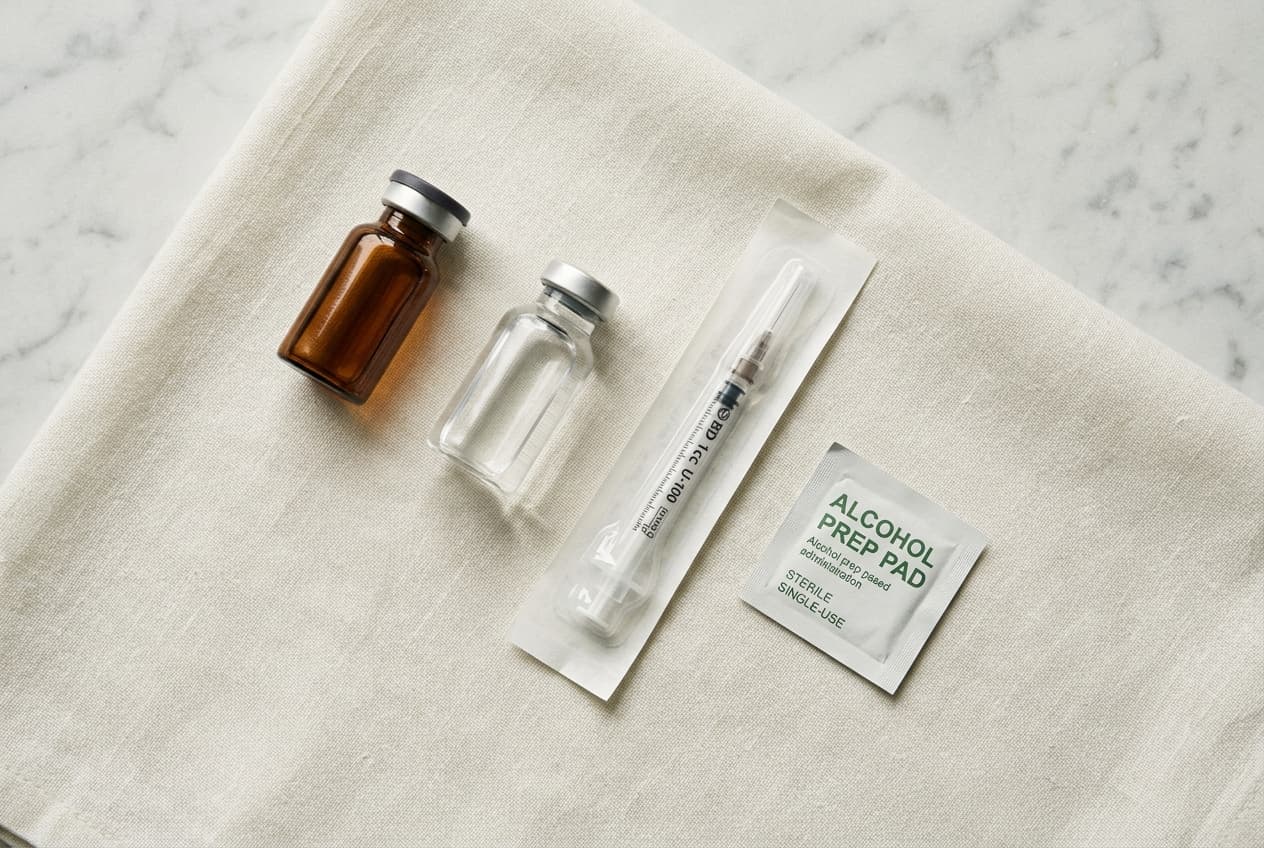
Gonadorelin vials are typically 10 mg lyophilised. Reconstitute with 2 ml bacteriostatic water for 5 mg per ml. A 100 mcg dose is 0.02 ml. That's 2 units on a U-100 insulin syringe, which sits at the edge of what you can measure accurately. If you want more measurable volumes, reconstitute with 5 ml for 2 mg per ml; then 100 mcg is 0.05 ml, which is 5 units. Subcutaneous into abdomen. Refrigerate; gonadorelin is one of the less stable peptides in solution, so use within 14 days for reliable potency.
Open calculator pre-filledStorage after reconstitution
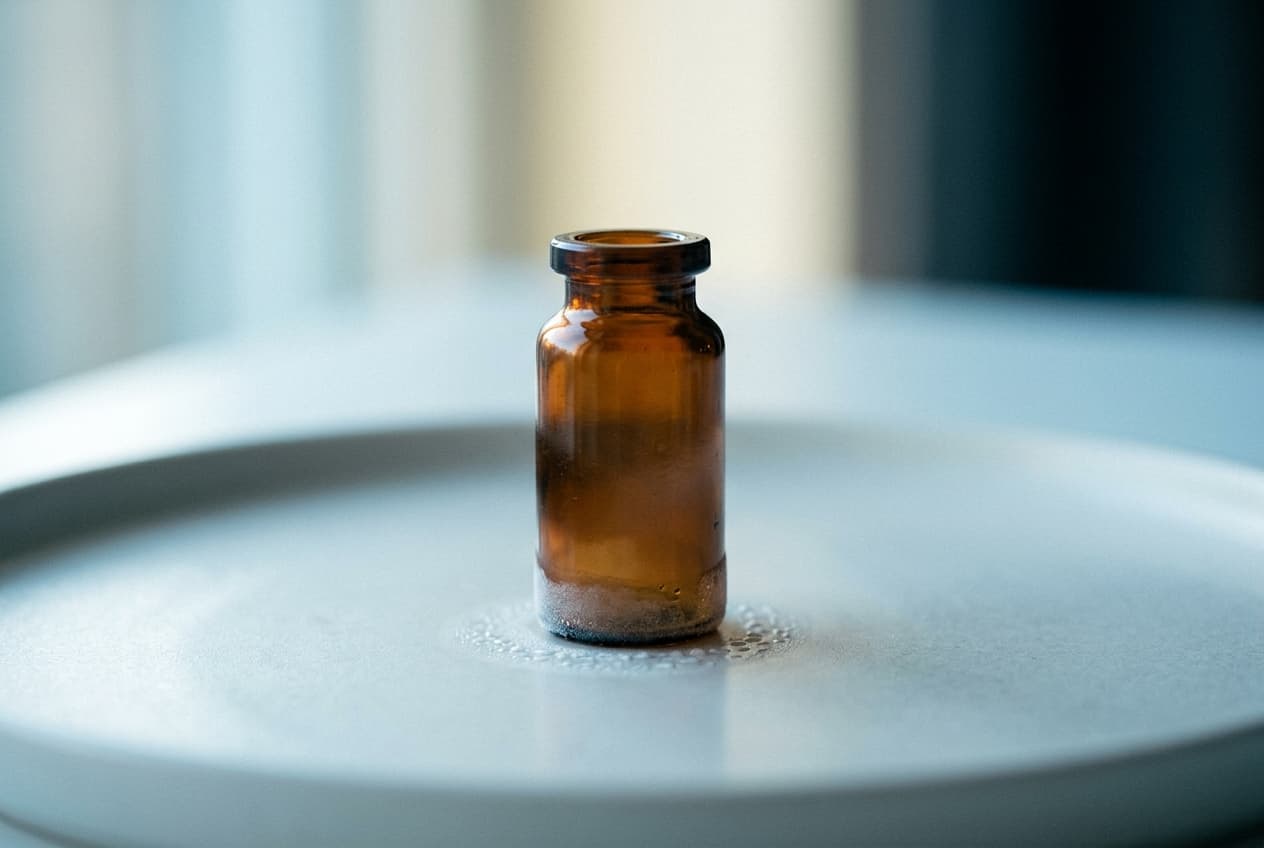
Refrigerate at 2 to 8 °C after reconstitution. Do not freeze. Light-protected. 28 days of stability at fridge temperature in BAC water. Some users freeze single-dose aliquots in sterile insulin syringes for longer storage. This works in practice but introduces sterility risk, so the simpler approach is to reconstitute smaller batches.
Cost & sourcing red flags
Typical price range: Compounded prescription gonadorelin from US TRT clinics (Defy Medical, Maximus Tribe, Henry Meds, Empower) runs $80 to 180 per 10 mg multi-dose vial after the consultation, with monthly protocols of 200 mcg twice daily landing around $50 to 120/month. Research-grade gonadorelin acetate is $60 to 110 per 10 mg vial. The price gap is narrower than most peptides, which makes the compounded prescription route attractive even for cost-sensitive users.
Red flags
- Research-grade vials labelled simply 'gonadorelin' without specifying gonadorelin acetate or gonadorelin hydrochloride. The salt form changes peptide-content mass: a 10 mg vial of the acetate is roughly 9 mg of free peptide, and an unlabelled vial cannot be dosed accurately.
- Compounded vials whose label dose differs significantly from the 503A norm (typical compounded strength is 3 mg/mL or 5 mg/mL after reconstitution). Outliers warrant a call to the pharmacy to confirm the strength rather than the diluent volume.
- Suppliers selling gonadorelin in pre-mixed liquid form at room temperature. Gonadorelin in solution degrades within 1 to 2 weeks unrefrigerated; lyophilised powder is the only stable shipping form.
- Pricing well below $50 per 10 mg vial from a research-grade source. Manufacturing cost on a 10-mer peptide is real and a price floor exists; below it, the powder is usually filler.
- Compounding pharmacies that bill gonadorelin without requiring lab work (baseline LH, FSH, testosterone, estradiol). A clinic willing to prescribe without baselines is unlikely to titrate the dose or monitor for the receptor desensitisation that drove gonadorelin onto the FDA Section 503A bulks list deliberations.
- Any vial claiming 'long-acting gonadorelin' or 'sustained-release'. The molecule has a 2 to 10 minute half-life by design; a sustained-release version is either a different molecule (leuprolide, triptorelin) or marketing fiction.
Pricing rots fast and varies by region and supplier. We list no vendors.
Common mistakes
Dosing once daily for convenience.
Better approach: Once-daily gonadorelin drifts toward continuous exposure, which desensitises the pituitary, the exact mechanism that makes leuprolide a chemical-castration drug. Twice daily, 12 hours apart, is the minimum-viable pulse pattern. Three times daily is closer to physiology if your schedule allows.
Using gonadorelin to bypass HCG on TRT for cost or convenience.
Better approach: If the goal is testicular volume maintenance on TRT, HCG is the simpler tool. Twice weekly, no pulse requirement, deeper safety data. Gonadorelin is the right pick only when you specifically want to preserve pituitary signalling, not just testicular function.
Escalating dose when labs don't move at week 4.
Better approach: If LH and FSH haven't budged by week 6, the rate-limiter is usually the pituitary, not your gonadorelin dose. Escalating from 100 mcg to 200 mcg twice daily rarely helps; switching to HCG (which acts downstream of the pituitary) usually does.
Storing reconstituted vials for 30 days like HCG.
Better approach: Gonadorelin is less stable in solution than HCG. Two weeks at fridge temperature is a more realistic shelf life. If a vial sits past 14 days, expect potency loss, which can look like 'the protocol stopped working' when it's actually a peptide-degradation problem.
Real-world tips
- Set two alarms: 8 AM and 8 PM, or whichever 12-hour window fits your life. Inconsistent timing degrades the pulsatile pattern more than missing the occasional dose.
- Use the smallest insulin syringe available. The dose volume is genuinely small (often under 5 units), and a too-large syringe makes the measurement sloppier than the protocol can tolerate.
- If you're combining gonadorelin with TRT, expect estradiol to rise slightly as the axis reactivates. Check labs at 4 and 8 weeks; treat what you see.
- Travel breaks the pulse pattern. If you're crossing more than three time zones, plan to either skip the protocol for the trip or carry insulin syringes and stay disciplined about the 12-hour interval at the new local time.
- Mood and libido tend to track LH levels more than total T levels on gonadorelin. If labs look better but you feel worse, look at how the pulses are actually being delivered. Desensitisation is the failure mode.
What users report
Aggregated from r/trtonline, r/Testosterone, ExcelMale, and the TRT clinic forums. Not clinical data.
Onset: Testicular fullness returns within 7 to 14 days of starting twice-daily 100 to 200 mcg subcutaneous injections; the volume rebound from a TRT-suppressed baseline plateaus by week 6 to 8, slightly slower than HCG produces in the same role.
Common reports
- Testicular fullness without the estrogenic 'puffiness' some users get from HCG. The pulsatile LH/FSH release mimics endogenous physiology more closely than HCG's 36-hour LH-analogue tail.
- No noticeable mood or libido shift on top of stable TRT testosterone. Most users describe gonadorelin as 'maintenance, not a felt drug', which matches its upstream mechanism.
- Injection fatigue from the twice-daily schedule. Users report drift from twice-daily to once-daily after a few weeks because the protocol asks for 14 injections a week, and adherence reports cluster around 70 to 80% rather than 100%.
- Small wheals at the subcutaneous injection site that resolve in under an hour, more common with the 1 mg/mL compounded concentrations than the 3 mg/mL.
- Users switching from HCG to gonadorelin sometimes report 1 to 2 weeks of testicular ache as LH receptor signalling resets to pulsatile input.
- 'Felt nothing different from going off HCG' is a common report among users on stable TRT who switch routes. The marker of success is bloodwork and testicular volume, not a felt change.
Where reports diverge from theory: Marketing copy from TRT clinics frames gonadorelin as 'physiologically superior to HCG' because it works upstream at the pituitary. Forum experience is messier: at the standard 100 to 200 mcg twice-daily dose, gonadorelin restores testicular volume but produces a smaller absolute testosterone bump from the testes than HCG does, because the pulsatile LH peaks from gonadorelin are lower than the sustained LH-analogue exposure HCG delivers. Users expecting HCG-equivalent felt effects often switch back. The 'upstream and elegant' framing oversells the experience for a meaningful minority.
When something else is the better tool
HCG
Use instead when: Simpler dosing, twice weekly, and a downstream Leydig-cell signal that doesn't depend on the pituitary working. For most testicular-volume or PCT goals, HCG is the easier tool.
Clomiphene or enclomiphene
Use instead when: Oral, cheap, and works by blocking estrogen feedback at the hypothalamus. A different lever on the same axis. The first-line choice for younger men with idiopathic hypogonadism.
Kisspeptin-10
Use instead when: Experimental upstream alternative, acting one step above GnRH. Worth watching as the literature develops, but not yet a substitute for the established gonadorelin/HCG protocols.
Based on 1 peer-reviewed study
- Why does pulsatile dosing matter so much?
- GnRH receptors on pituitary gonadotrophs need recovery time between pulses. Continuous exposure causes receptor internalisation and downregulation, the same mechanism that makes leuprolide a chemical-castration drug. Pulse the signal, the system stays responsive. Flood it continuously, it shuts off.
- How is gonadorelin different from triptorelin or leuprolide?
- Same receptor, different half-lives. Gonadorelin is the native sequence with a short half-life (minutes), which is what allows pulsatile dosing. Triptorelin and leuprolide are modified analogues with long half-lives, used specifically to desensitise and suppress the axis. They are functionally opposite tools.
- Can I use gonadorelin as PCT after a steroid cycle?
- Yes, and some protocols do, particularly for users wanting full upstream axis recovery. The catch is the twice-daily injection schedule for 8 to 12 weeks, which is more burden than oral SERMs. Gonadorelin shines when you want the pituitary engaged, not just the testes.
- What's the best time of day to dose?
- 12 hours apart is the rule. The specific hours matter less. Many users do 8 AM and 8 PM, or first-thing-AM and last-thing-PM. The body's natural GnRH pulse frequency is higher than twice daily, so this is already a compromise. Protect the interval.
- Is the diagnostic dose the same as the therapeutic dose?
- No. The GnRH stimulation test uses a single 100 mcg bolus and measures LH/FSH response over 60 minutes. Therapeutic dosing is the same magnitude per pulse but repeated indefinitely. Different timescales, same molecule.
Last updated:
Related peptides
Other compounds in this category
- PT-141Melanocortin-receptor agonist that works on desire in the brain, not blood flow in the pelvis. FDA-approved as Vyleesi for premenopausal HSDD.
- HCGHuman chorionic gonadotropin. A placental hormone that mimics LH and tells the testes to keep making testosterone and sperm. The most clinically established HPG-axis tool in this catalogue.
- OxytocinThe body's bonding hormone, repurposed as intranasal spray for social and intimacy effects. The hype outpaces the trial data.
- Kisspeptin-10The upstream trigger of the entire reproductive axis. Early human trials hint at uses for HSDD and hypothalamic amenorrhea; nothing is approved.
- HMGHuman menopausal gonadotropin. Extracted from postmenopausal urine and containing both LH and FSH activity. The FSH supply that HCG can't provide.