

Epithalon
Also known as: Epitalon · Epithalamin
A Khavinson-school tetrapeptide (Ala-Glu-Asp-Gly) marketed for telomere lengthening and pineal regulation. The telomere claim rests on small Russian studies; the sleep effect is the more honest reason people use it.
Overview
Epithalon, also spelled Epitalon, is the synthetic stand-in for Epithalamin, a pineal-gland extract Khavinson's group worked with in the Soviet era before isolating the active tetrapeptide. The longevity marketing is loud and built on a small handful of Russian studies showing telomerase upregulation in cell culture and modest lifespan effects in elderly cohorts, mostly from the same research network. The more reproducible effect, and the one most users actually notice, is on sleep architecture and the endogenous melatonin rhythm, which is consistent with the pineal-axis story. People reach for it for two very different reasons: serious sleep restructuring (where the evidence floor is reasonable for a peptide of this class) and telomere-based anti-aging (where the evidence is small, single-network, and frequently overstated in the supplement marketing). The dosing pattern is the same 10-day course twice a year that Pinealon uses, on the same theoretical basis.[1]
Evidence quality
Khavinson, Anisimov, and colleagues have published cell-culture telomerase data and small clinical cohorts in elderly Russian populations, including the often-cited Khavinson 2003 longevity study. Independent replication outside that network is sparse. The melatonin-rhythm and sleep-architecture data is more robust than the telomere data. Treat the longevity marketing with skepticism; treat the sleep effect as plausible at the level of a short peptide with a long Russian clinical tradition.
Benefits & timeline
Benefits
- Deeper, more consolidated sleep. The most reproducible user-reported effect, often noticed within the first week of a course
- Modulation of endogenous melatonin rhythm in older adults whose pineal output has declined
- Possible telomerase activation in vitro and in small human cohorts. Interesting, far from definitive
- Compatible with the broader Khavinson short-peptide protocol, alternating with Pinealon across the year
Timeline
Day 1 to 5
Sleep depth improves for most users; vivid dreams are common.
Day 6 to 10
Full course complete. Subjective rest tends to be the clearest signal.
Weeks 2 to 12 post-course
Reported effects often persist or develop further. The framework's claim is that the peptide does its work and leaves.
6-month mark
Standard re-dosing window. Some users go to yearly. Continuous dosing is outside protocol and has no evidence behind it.
Dosage protocols

Advanced
10 mg
split AM/PM
Beginner
5 mg
daily
10-day course twice yearly is the classic protocol.
Standard
10 mg
daily
Titration & adjustment
Khavinson short-course protocol: 10 mg subcutaneously each evening for 10 days. Repeat once or twice yearly. No daily long-term dosing. If sleep depth does not improve in the first course, the second course at 6 months is unlikely to help. Re-evaluate before scheduling another.
Injection timing

Once daily, evening, subcutaneous (abdomen or thigh). 10-day course twice yearly is the convention. Many users align with the spring/autumn equinoxes for habit-tracking.
Side effects & contraindications

- mildVivid or unusually detailed dreams during the course.
- mildDrowsiness on dosing days, especially with evening injections.
- mildInjection-site soreness. Minor with abdominal subcutaneous sites.
- moderateLong-term human safety data is limited to the Khavinson network's clinical experience. The track record is real but not independently replicated at the scale Western drug safety expects.
Contraindications
- Pregnancy and breastfeeding
- Active cancer or recent cancer history. Telomerase activation is the marketing claim and exactly the mechanism you do not want to amplify in this context
- Acute psychiatric instability
- No pediatric data. The framework targets older adults
Reconstitution & injection
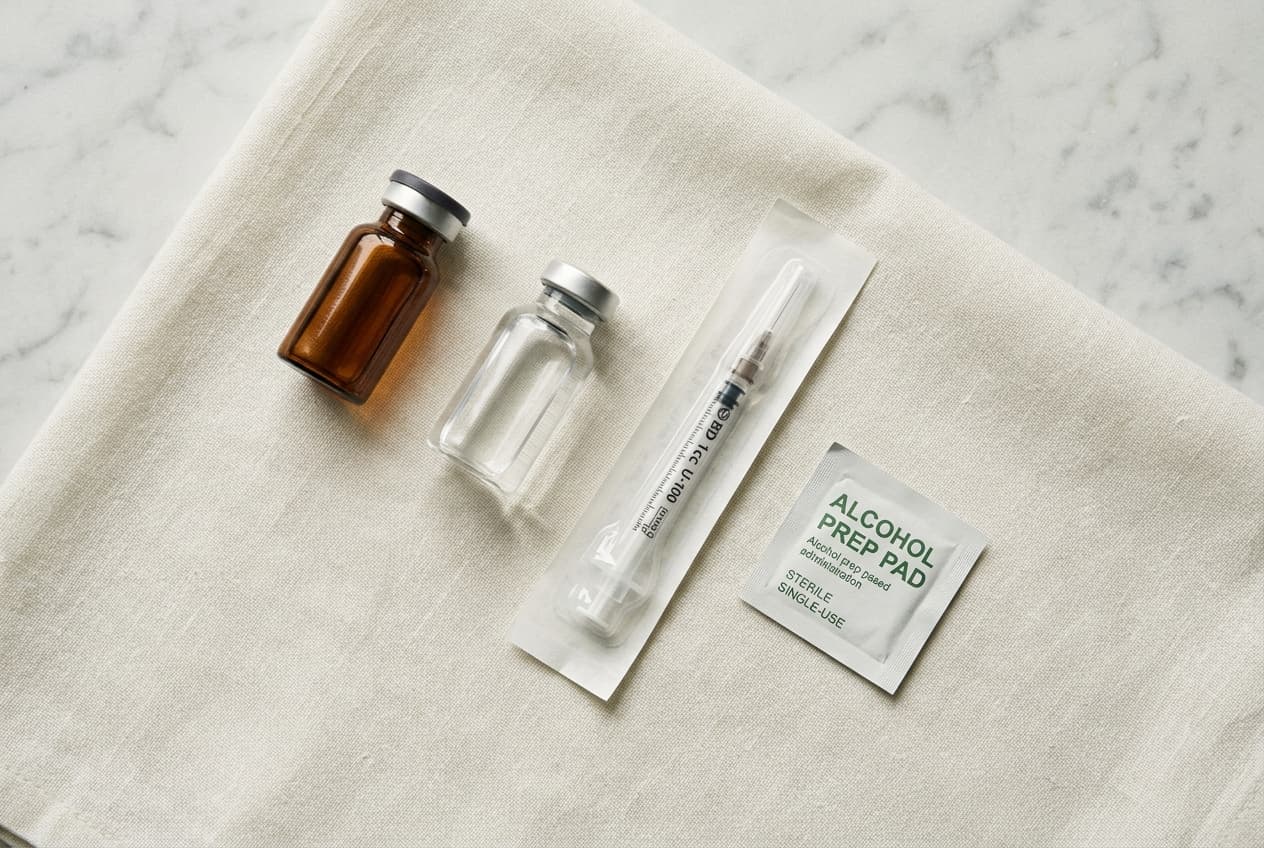
A 50 mg vial with 2.5 ml bacteriostatic water gives 20 mg/ml. A 10 mg dose draws 0.5 ml, which is 50 units on a U-100 insulin syringe. Inject subcutaneously into the abdomen in the evening for 10 consecutive days. The 50 mg vial covers a 5-day half-course at 10 mg per dose, so most users will open a second vial mid-course. Refrigerate after reconstitution; potency is reasonable for 3 to 4 weeks at fridge temperature.
Open calculator pre-filledStorage after reconstitution
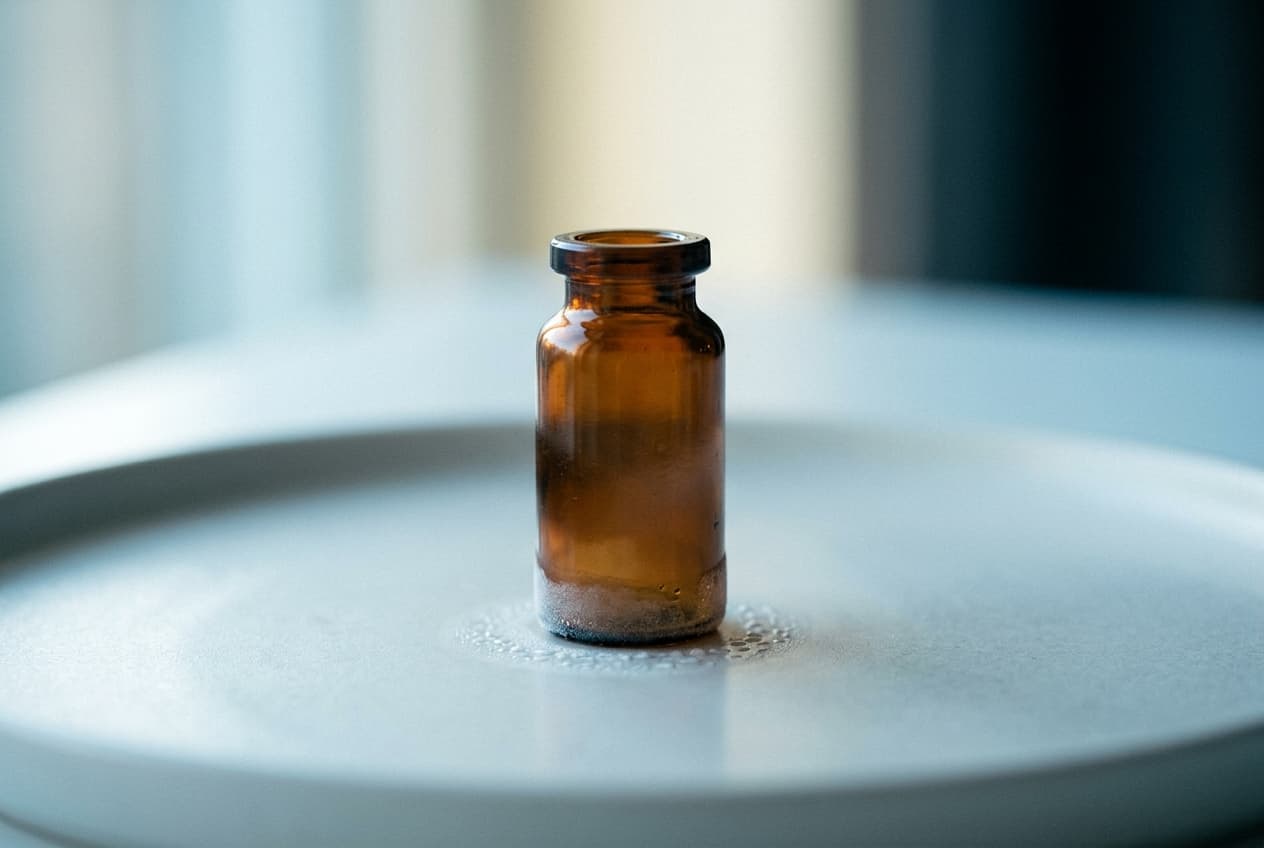
Refrigerate at 2 to 8 °C after reconstitution. Do not freeze. Light-protected. 28 to 30 days of stability at fridge temperature. Because Epithalon is typically dosed in 10 to 20-day pulses, a single reconstituted vial often outlives the dosing block. Only mix what you need for the current course.
Cost & sourcing red flags
Typical price range: $30-60 per 50 mg lyophilised vial from US research-grade suppliers; $100-180 for 10-vial bulk boxes (500 mg total). A standard Khavinson cycle of 5-10 mg/day for 10-20 days, repeated 2-3 times per year, runs $60-150 per cycle in raw peptide.
Red flags
- Telomerase-activation and lifespan-extension claims trace almost entirely to Khavinson-affiliated publications. Western replication of the telomerase mechanism in human cells is limited; the lifespan animal data has not been re-run by an independent group. Buyers are cycling on faith in a single laboratory's body of work.
- Vendors quoting a 'biological age reversal' claim with a number attached ('reverses aging by X years'). No published epitalon trial has reported a validated biological-age clock endpoint (Horvath, GrimAge, PhenoAge) in a controlled design. The number is invented.
- Tablets, sublingual sprays, or oral capsules labelled 'Epithalon.' The 4-amino-acid tetrapeptide has poor enteric stability and almost no published oral bioavailability data. The Khavinson human trials used subcutaneous injection or intranasal; oral product is not a known-equivalent route.
- Single 50 mg vials priced under $20 from new vendors. Ala-Glu-Asp-Gly is genuinely cheap to synthesise, but vials this cheap with no batch COA have shown up in community assays as either underdosed or as oligomerised/degraded peptide.
- Continuous daily dosing protocols marketed as 'maximum results.' The Khavinson literature explicitly used short cycles (10-20 days, 2-3 times per year). Continuous use is not what the underlying research tested, and the long-term safety of chronic telomerase modulation in humans is unstudied.
- Bundling with 'anti-cancer screening packages' and undated lab work. Telomerase upregulation has a plausible cancer-risk angle that the Khavinson papers did not power to detect; vendors monetising the concern by selling unrelated 'screenings' alongside the peptide are exploiting it, not addressing it.
Pricing rots fast and varies by region and supplier. We list no vendors.
Common mistakes
Believing the telomere marketing as if it were established science.
Better approach: The telomerase claim is one research network's work, mostly in cell culture and small human cohorts. It is interesting, not proven. If you are using Epithalon because you want to live longer, you are paying for a thesis. If you are using it for sleep, the case is more honest and the dose-effect easier to assess.
Running continuous daily injections "for stronger effects".
Better approach: The 10-day course is the protocol. Continuous dosing has not been tested, has no evidence to recommend it, and contradicts the gene-expression rationale that justifies the framework in the first place. Either accept the cycling structure or pick a different tool.
Skipping the off period because the first course felt good.
Better approach: If anything, a positive first course is evidence the framework is working as advertised. The effects are meant to persist into the off window. Doubling up courses is impatience, not protocol.
Using it in a 28-year-old for telomere extension.
Better approach: The Khavinson cohorts were older adults with measurable age-related decline. Younger users have a flatter baseline and routinely report less. Spend the money on the boring fundamentals (sleep, training, nutrition, stress) that have stronger evidence at any age.
Real-world tips
- Plan the course around a calm week. Vivid dreams and slight drowsiness in the morning are easier to absorb when you are not on a deadline.
- Evening dosing pairs with the pineal/sleep effect, which is the most reproducible signal.
- Track sleep depth with a wearable for two weeks before the course, the 10 days during, and 4 weeks after. The post-course persistence is the framework's claim and the easiest one to verify in yourself.
- Rotate injection sites across the abdomen day to day. Ten consecutive injections into the same square inch is more soreness than necessary.
- Pair sensibly with Pinealon: alternate courses across the year rather than overlapping them. The Khavinson convention is sequential.
What users report
Aggregated from r/longevity, r/Nootropics, and self-experimenter blogs. Western user data is essentially uncontrolled self-report; not clinical evidence.
Onset: Subcutaneous, dosed in the evening; users describe sleep changes within 3-7 days of starting a 10-20 day cycle, with the most-cited subjective peak landing in the second half of the cycle.
Common reports
- Deeper sleep is the dominant report. Users describe waking less often, dreaming more vividly, and feeling more rested at a shorter total sleep duration. This is the single most consistent signal across user logs.
- Dreams become unusually vivid and narrative; some users find this pleasant, others stop because of disrupted sleep continuity.
- Morning clarity and circadian regularity. Users describe waking around the same time without an alarm, which they frame as 'circadian re-tuning.'
- A subset reports skin texture and recovery improvements over multiple cycles. These are slow, cycle-over-cycle changes, not within-cycle effects, and are harder to separate from confounders (sleep, season, diet).
- Non-response is real. Roughly a quarter of self-experimenters log no felt change even at 10 mg/day for 20 days. Younger users are over-represented in the non-responder group.
- No acute side effects of note. Headache or fatigue in days 1-2 is occasionally reported and self-resolves. The 'felt-nothing' camp and the 'sleep-much-better' camp dominate the report distribution; there is little in between.
Where reports diverge from theory: The mechanistic claim is telomerase activation and downstream lifespan extension. The felt user experience is sleep change. These two endpoints are causally unrelated within a single cycle: a 10-20 day course is not long enough to produce measurable telomere lengthening in humans, and the rapid sleep effect is more parsimoniously explained by pineal/melatonin-axis modulation than by telomerase. Western users cycling epithalon are almost certainly buying a sleep modulator at a longevity-peptide price; whether the longevity claim survives independent testing remains an open question, and current use proceeds without that confirmation.
When something else is the better tool
DSIP or melatonin
Use instead when: Your primary goal is sleep depth and onset, full stop. These are daily tools with cleaner mechanism-to-effect mapping. Epithalon is the long-cycle option with the additional anti-aging hypothesis layered on top.
Pinealon
Use instead when: You want the Khavinson short-peptide approach but the cognitive lift is more important than the sleep restructuring. The two are framework-compatible and routinely alternated.
Boring longevity fundamentals (sleep, training, nutrition, stress)
Use instead when: You have not yet done the structural work. Telomere length and biological age respond meaningfully to behavioural interventions with vastly stronger evidence than any short peptide. Run those first; consider Epithalon as a small layer if a measurable gap remains.
Based on 1 peer-reviewed study
- Will it really lengthen my telomeres?
- Honest answer: maybe a little, in older adults, based on small studies from one research network. The cell-culture data is more clear-cut than the human data. Treat the telomere claim as plausible-but-thin, not as established. The sleep effect is the more reliable reason to use it.
- Why such short courses?
- The Khavinson framework holds that short peptides modulate gene expression and the effects outlive the dosing window. The 10-day course twice a year is what the original Russian trials tested. Continuous dosing has not been studied and contradicts the rationale.
- Is there any human safety data?
- The Khavinson network has decades of clinical use in older Russian populations. That is real reassurance, but it is not the same as a Western Phase 3 dossier. The risk profile looks friendly at the protocol doses; the absence of large independent safety trials remains the honest caveat.
- Can I combine with hormone replacement?
- There is no published interaction data. Most users who combine it with thyroid replacement, testosterone replacement, or female hormone therapy report no obvious issues, but "no reports" is not the same as "studied". Coordinate with the prescribing clinician on the hormonal side.
- Is 50 mg or 100 mg vials standard?
- Both exist. The 50 mg vial covers half a 10-day course at the standard 10 mg per dose, which is convenient if you want fresh reconstitution mid-course. 100 mg vials are also widely available and reduce per-dose cost. Either works; choose based on storage stability preferences.
Last updated:
Related peptides
Other compounds in this category
- NAD+Technically a coenzyme rather than a peptide. Central to energy metabolism, DNA repair, and sirtuin activity. Levels fall with age; injectable and IV protocols try to restore them.
- MOTS-cA 16-amino-acid peptide encoded inside the mitochondrial genome. The cell's own metabolic stress signal. Animal data on insulin sensitivity is good; human data is small but growing.
- SS-31 (Elamipretide)A four-amino-acid peptide that homes to the inner mitochondrial membrane and stabilises cardiolipin. Currently the most clinically advanced mitochondrial peptide in trials.
- FOXO4-DRIThe headline senolytic peptide. It disrupts the FOXO4-p53 interaction inside senescent cells, pushing them into apoptosis while sparing healthy cells. Striking in mice, untested in humans.
- AICARAn AMPK activator that turns on the molecular pathway exercise normally activates. Famous as the "exercise in a syringe" rodent paper and infamous as a WADA-banned substance.