

Pinealon
Also known as: EDR tripeptide
A Khavinson-school tripeptide (Glu-Asp-Arg) for cognitive support in older adults. Used in short, intermittent courses; the published evidence is mostly from Russian gerontology research.
Overview
Pinealon belongs to the Russian "bioregulator" tradition associated with Vladimir Khavinson and the St Petersburg Institute of Bioregulation and Gerontology, which has been publishing on short peptides since the late Soviet period. The hypothesis is that minimal peptide sequences derived from organ extracts can normalise tissue-specific gene expression, and Pinealon is positioned as the pineal-cognitive entry in that catalogue. The dosing pattern is unlike most peptides in this catalogue: ten daily injections, then six months off, on the theory that the gene-expression effects persist long after the peptide is gone. Users report sleep depth and mild cognitive lift in the older-adult demographic the trials targeted; younger users often report less, which fits the framework's claim that the effect is corrective rather than enhancing. The evidence base is real but narrow. Most studies are from the same research network, in Russian-language journals, and have not been independently replicated at scale.[1]
Evidence quality
Published trials in the Khavinson network (Khavinson, Anisimov, Morozov, and colleagues) cover cognitive function, sleep architecture, and gene-expression effects in older adults. Most are small open-label or comparative studies in Russian-language journals; the English-language literature is largely review articles by the same group. No independent Phase 2 or 3 trials exist. Honest read: a long real-world track record in one tradition, with thin independent verification.
Benefits & timeline
Benefits
- Sleep depth improvement, often the first noticeable change in a 10-day course
- Mild cognitive lift in older adults. Memory and processing speed in the published trials
- Mood floor improvement, particularly in users with mild age-related cognitive complaints
- Compatible with the broader Khavinson protocol structure, alternating with Epithalon and similar bioregulators
Timeline
Day 1 to 5
Sleep often deepens within the first few nights.
Day 6 to 10
Cognitive and mood changes, if they appear, settle here. This is the full course.
Weeks 2 to 8 post-course
Reported effects often persist or even develop further into the off period. The framework's central claim.
6-month mark
Standard re-dosing point. Some users go yearly. Continuous dosing is explicitly outside protocol.
Dosage protocols

Advanced
10 mg
split AM/PM
Beginner
5 mg
daily
Standard
10 mg
daily
Titration & adjustment
Khavinson short-course protocol: 10 mg subcutaneously daily for 10 days. Repeat once every 6 months. No daily long-term dosing.
Injection timing

Once daily, evening, subcutaneous. Cycle is 10 days only. No long-term dosing.
Side effects & contraindications

- mildVivid dreams during the course.
- mildMild drowsiness on dosing days, particularly with evening injections.
- mildInjection-site soreness. Usually minor with subcutaneous abdominal sites.
- moderateLong-term safety data outside the Khavinson research base is limited. The published record is decades long but concentrated in one network.
Contraindications
- Pregnancy and breastfeeding
- Active cancer or recent cancer history. Gene-expression-modulating peptides are an obvious caution category here
- Acute psychiatric crisis
- No pediatric data. The framework targets older adults
Reconstitution & injection
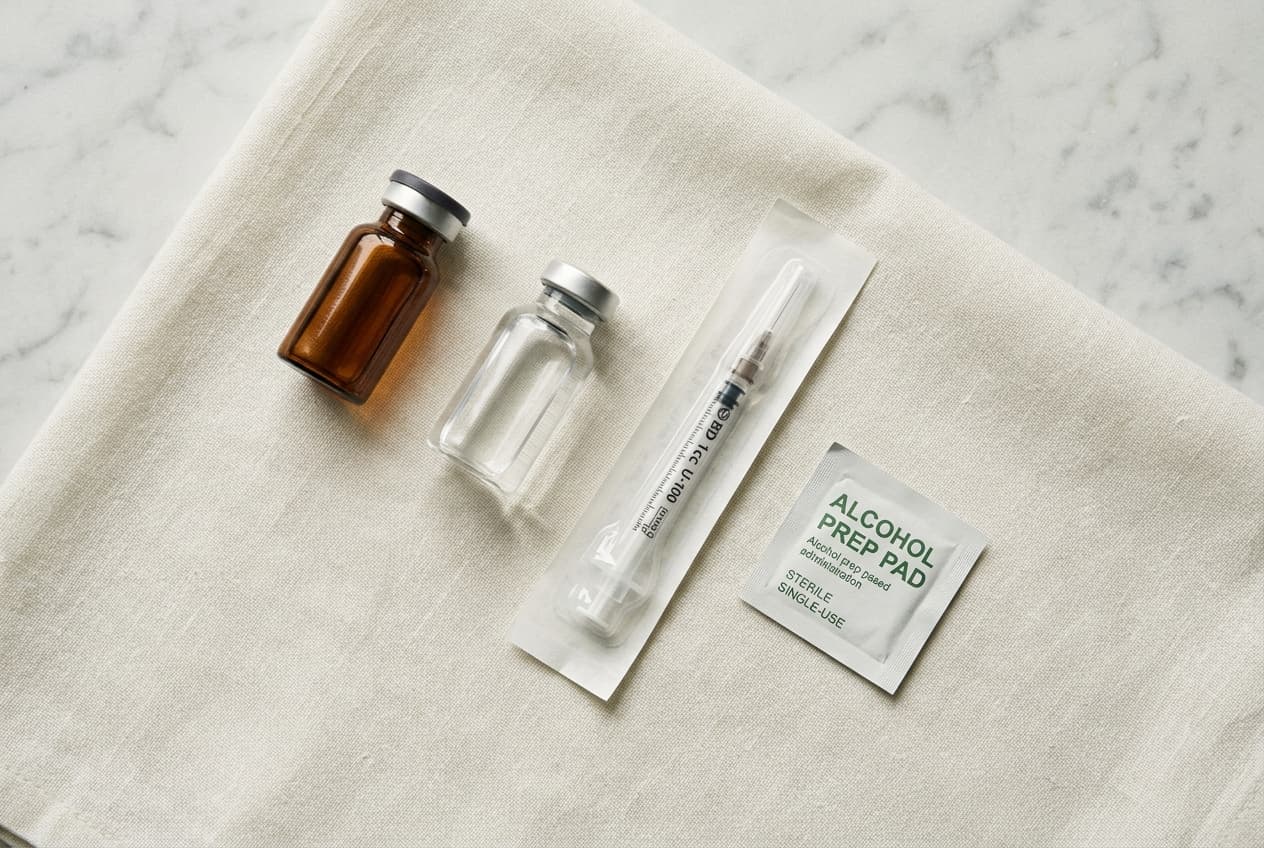
A 10 mg vial with 2 ml bacteriostatic water gives 5 mg/ml. A 10 mg dose draws the full 2 ml. Most users will use the entire vial per injection rather than store a partial. Inject subcutaneously into the abdomen, evening dosing, for 10 consecutive days. Refrigerate any partial vials. If you are using a 5 mg dose instead, draw 1 ml. But the standard Khavinson protocol uses the full 10 mg.
Open calculator pre-filledStorage after reconstitution
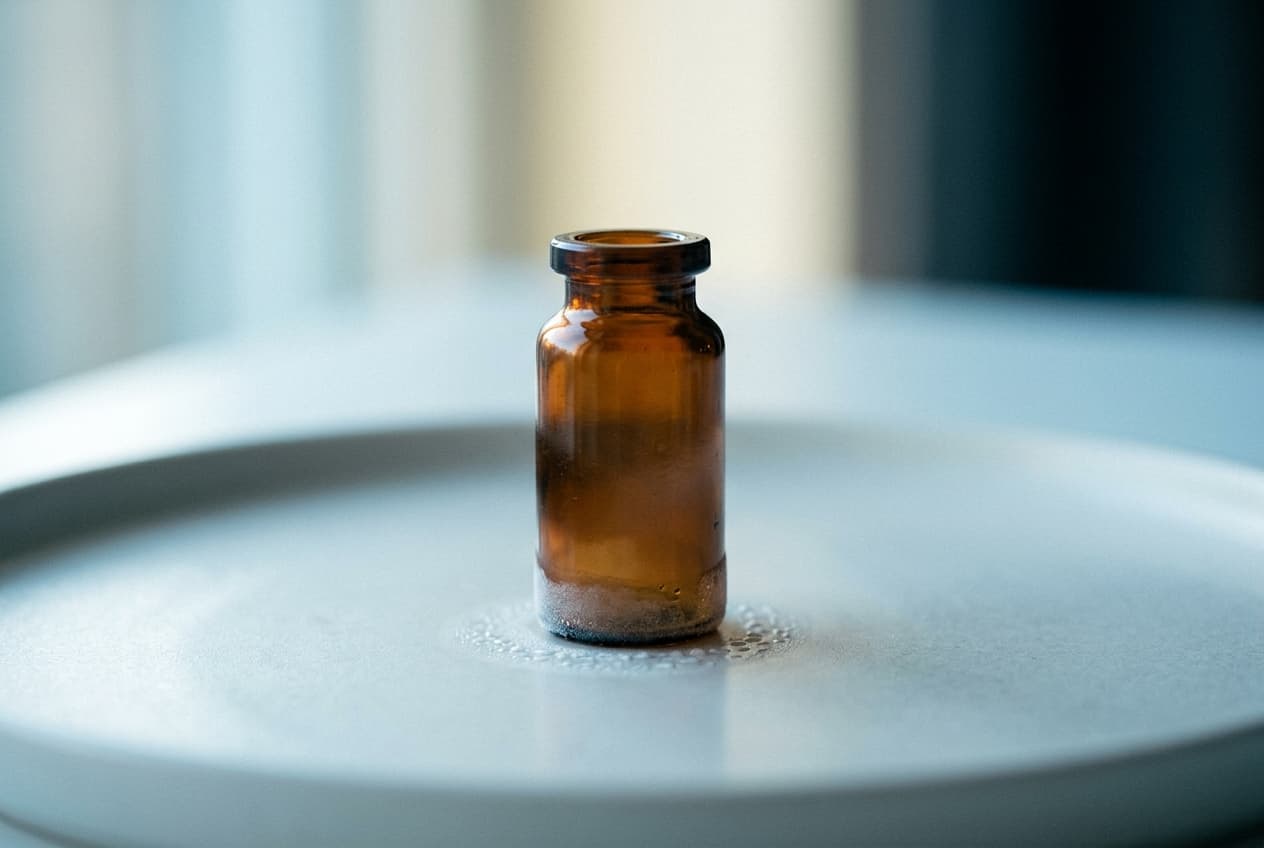
Refrigerate at 2 to 8 °C after reconstitution. Do not freeze. Light-protected. 28 to 30 days of stability at fridge temperature in BAC water. The tripeptide structure is robust.
Cost & sourcing red flags
Typical price range: $30-60 per 20 mg lyophilised vial from US research-grade suppliers; Russian pharmacy oral capsules (Cytogen-branded Cortexin/Pinealon family) run $40-80 per 60-capsule box. A standard 20-30 day cycle at 20 mg/day costs $40-90.
Red flags
- Almost all clinical and mechanistic data on Pinealon comes from Khavinson's St. Petersburg group at the IBG RAS. Independent Western replication is sparse; Western users are cycling it on a Russian protocol that has not been validated in any non-Khavinson-affiliated trial.
- Oral capsules from non-pharmacy resellers labelled 'Pinealon' that list only 'bioregulator peptide complex' as the ingredient. The genuine Cytogen oral form has a stated 20 mg dose of the Glu-Asp-Arg tripeptide; opaque ingredient lists usually mean a generic peptide hydrolysate is in the capsule, not the EDR tripeptide.
- Injectable Pinealon vials priced under $20 with no batch COA. Glu-Asp-Arg is a 3-amino-acid peptide and genuinely inexpensive to synthesise, but bargain vials with no analytical paper trail have shown up in independent assays as containing free amino acids rather than the synthesised tripeptide.
- Vendors marketing Pinealon as a 'telomerase activator' or 'lifespan extender.' That claim is borrowed from Epitalon marketing; Pinealon's Khavinson literature describes neuroprotective and cognitive endpoints, not direct telomerase activation. The substitution is a sourcing red flag.
- Bundled 'bioregulator stacks' (Pinealon + Cerluten + Ventfort + Vladonix) sold without per-peptide pricing. The bundle obscures whether the buyer is getting therapeutic doses of any individual peptide; Khavinson's protocols treat each bioregulator as a separate course.
Pricing rots fast and varies by region and supplier. We list no vendors.
Common mistakes
Dosing it daily long-term like a typical peptide.
Better approach: The protocol is 10 days on, 6 months off, by design. Continuous dosing is not how the framework was tested and not what the gene-expression rationale predicts. If you cannot tolerate that long a gap, you are using the wrong tool. Pick a daily-dosing nootropic instead.
Expecting a same-day acute effect.
Better approach: Pinealon is not Semax. The reported effects develop over the 10-day course and into the weeks that follow. Judging it after 3 days is judging it before it can have done anything.
Using it in a 25-year-old for general cognitive enhancement.
Better approach: The trials targeted older adults with age-related cognitive complaints. The framework explicitly positions the effect as corrective. Younger users routinely report little, which fits. There may be nothing to correct. Spend the budget on sleep and training instead.
Skipping the off period because the first course felt good.
Better approach: The protocol's structure is the protocol. Doubling up courses or shortening the gap has no evidence behind it and the Khavinson literature is explicit that the effect outlives the dosing window. Trust the framework or use a different one.
Real-world tips
- Mark the calendar at the start of a course. 10 days is short and easy to lose count of on a busy schedule.
- Evening dosing pairs cleanly with the sleep-deepening effect, which is the most reliable subjective change.
- Track sleep depth with a wearable across the course and the following month. The post-course persistence is what the framework predicts and what you want to confirm in yourself.
- Refrigerate vials. Reconstituted vials should be used promptly. Pinealon is typically dosed as a full-vial injection rather than stored as a multi-dose preparation.
- Pair sensibly with Epithalon: alternate them across the year rather than running both simultaneously. The combined Khavinson protocol is sequential, not concurrent.
What users report
Aggregated from r/longevity, r/Nootropics, and Khavinson-bioregulator user logs. Western user base is small and self-selected; not clinical data.
Onset: Oral or subcutaneous, taken in the morning on an empty stomach; users describe subtle sleep-quality improvements in the first week of a 20-30 day cycle, with the cognitive shift (described as 'cleaner thinking') landing around week 3.
Common reports
- Sleep depth improves before sleep timing does. Users describe waking less during the night and feeling more recovered, without a change in when they fall asleep.
- A subtle reduction in mental fatigue under sustained cognitive load. Most reported by users over 40 and by people recovering from burnout or post-viral cognitive fog. Younger and unstressed users frequently report no felt effect.
- Effects persist 4-8 weeks after the cycle ends. This delayed-and-sustained signature is the most distinctive thing in the user reports and matches Khavinson's claim that the peptide signals gene expression changes rather than producing an acute receptor-binding effect.
- Mild headache or a heavy-headed feeling in days 1-3 of a course, mostly resolving by week 1.
- No felt acute dose. Users expecting a Semax-like or noopept-like first-day signal usually report 'nothing,' which causes early abandonment before the 3-4 week timeline plays out.
- Non-response is high in healthy 25-40 year olds who are using it speculatively. The peptide's claimed effects are largely in age-related cognitive decline; absence of that decline removes the substrate for the effect.
Where reports diverge from theory: Khavinson's published work positions Pinealon as a gene-regulating tripeptide with measurable effects on brain cell oxidative stress and neuron survival. Western user reports describe a much narrower and more variable experience: a mild sleep and cognitive lift in middle-aged and older users, blank in younger users. The mechanism described in the Russian literature is not falsifiable from felt experience, and the Western community is essentially betting on Khavinson's data without independent confirmation. Honest user logs include this caveat; marketing copy generally does not.
When something else is the better tool
Semax
Use instead when: You want a daily-use focus tool with a clear same-day effect. Semax is the more conventional nootropic; Pinealon is the long-cycle, slow-build option.
Epithalon
Use instead when: Your primary interest is sleep architecture and the broader anti-aging framework rather than cognitive lift specifically. The two are paired across the year in the Khavinson tradition.
Standard cognitive interventions (exercise, sleep, BDNF-friendly nutrition)
Use instead when: You have not done the baseline work. Pinealon on top of poor sleep and a sedentary lifestyle is barely noticeable. The framework was tested in older adults who were otherwise doing reasonable lifestyle work.
Based on 1 peer-reviewed study
- Why only 10 days?
- The Khavinson framework holds that short peptides modulate gene expression with effects that persist after the peptide clears. The 10-day course is what the original Russian trials used. Continuous dosing has not been tested and has no evidence to recommend it.
- Does the gene-expression claim hold up?
- The Khavinson group has published gene-expression data supporting it. Independent replication is sparse, so the mechanism story is plausible but not closed. Use it as a hypothesis, not as established science.
- Will I feel something on day one?
- Sleep often deepens early; cognitive effects build over the course. If nothing has moved by day 10, the second course at six months is unlikely to be different.
- Combine with Epithalon?
- The Khavinson convention is sequential rather than concurrent. Alternate them across the year. A typical pattern is Pinealon course in spring, Epithalon course in autumn, or vice versa.
- Is this approved anywhere?
- Short peptide bioregulators have a regulatory presence in Russia that doesn't translate cleanly to Western drug approval categories. Treat Pinealon as a research-grade peptide with a clinical tradition behind it rather than an approved medication.
Last updated:
Related peptides
Other compounds in this category
- SemaxA Russian-developed heptapeptide based on a fragment of ACTH(4-10). Used intranasally as a focus and neuroprotection tool. Registered in Russia, almost unknown in Western clinical practice.
- SelankA Russian tuftsin-derived heptapeptide used intranasally for anxiety without sedation. Approved domestically as an anxiolytic; the Western evidence base is thin but the user reports are consistent.
- VIP (Vasoactive Intestinal Peptide)A 28-amino-acid neuropeptide repurposed intranasally for chronic inflammatory response syndrome under the Shoemaker protocol. The clinical evidence is largely from a single practitioner network.