
Cagrilintide
Also known as: AM833
Long-acting amylin analogue for once-weekly dosing. Useful on its own; dramatically more useful paired with Semaglutide as the CagriSema combination.
Overview
Cagrilintide is the long-acting cousin of pramlintide, which has been on the diabetes market since 2005 for postprandial glucose control. Amylin is co-secreted with insulin and acts through receptors distinct from GLP-1. It slows gastric emptying, suppresses glucagon, and signals satiety through the area postrema. Novo Nordisk engineered Cagrilintide for a 7-day half-life, matching Semaglutide's dosing rhythm. As monotherapy it produces about 8% weight loss; the more interesting story is what happens when you combine it with Semaglutide (the CagriSema regimen), where the two mechanisms compound for roughly double the loss.[1]
Evidence quality
Novo Nordisk published a Phase 2 monotherapy trial in The Lancet (2021) showing 6.0 to 10.8% weight loss across the dose range. The molecule has not been pursued for monotherapy approval; instead, Novo has folded it into the CagriSema combination as the lead clinical strategy. Independent Phase 3 monotherapy data does not exist as of 2026.
Benefits & timeline
Benefits
- Average 8 to 10% body-weight reduction as monotherapy at 2.4 mg over 26 weeks
- Mechanism distinct from GLP-1, so it adds rather than overlaps when stacked
- Milder GI side effect profile than GLP-1 agonists at equivalent weight-loss steps
- No meaningful glycaemic effect in non-diabetics, so usable as a satiety tool without affecting blood sugar
Timeline
Week 1 to 4
0.3 mg starter. Appetite shift is subtler than with GLP-1. Meals feel slightly smaller rather than fully suppressed.
Week 6 to 8
Climbing through 0.6 to 1.2 mg in 2-week steps. First measurable weight loss.
Week 12
On 1.7 mg. Satiety effect now noticeable: you stop eating earlier than you used to without trying.
Week 24+
On 2.4 mg. Plateau zone for monotherapy. If stacking with Semaglutide, this is when the combined effect compounds.
Dosage protocols

Advanced
2.4 mg
once weekly
Beginner
0.3 mg
once weekly
Standard
1.2 mg
once weekly
Titration & adjustment
Start at 0.3 mg weekly. Escalate to 0.6, 1.2, 1.7, and 2.4 mg in 2-week steps. Nausea is milder than with GLP-1 agonists, so a faster escalation is usually well tolerated. If pairing with Semaglutide, escalate the two on parallel schedules so doses match (the CagriSema convention).
Injection timing

Once weekly. Time of day does not affect efficacy. Most users co-time with their GLP-1 injection (if they have one) to minimise injection days.
Side effects & contraindications

- mildNausea, generally milder than with GLP-1 agonists at comparable weight-loss steps.
- mildInjection-site irritation more common than with Semaglutide. Small red bumps that fade in 24 hours.
- mildConstipation in early titration.
- moderateInvestigational outside trial settings. Long-term safety data is thinner than for established GLP-1s.
Contraindications
- Pregnancy or active conception attempts
- Severe gastroparesis. Same slowing-of-the-stomach concern as the incretins
- Hypoglycaemia-prone type 1 diabetics if combining with insulin
- Active eating disorder where additional satiety signalling is contraindicated
Reconstitution & injection
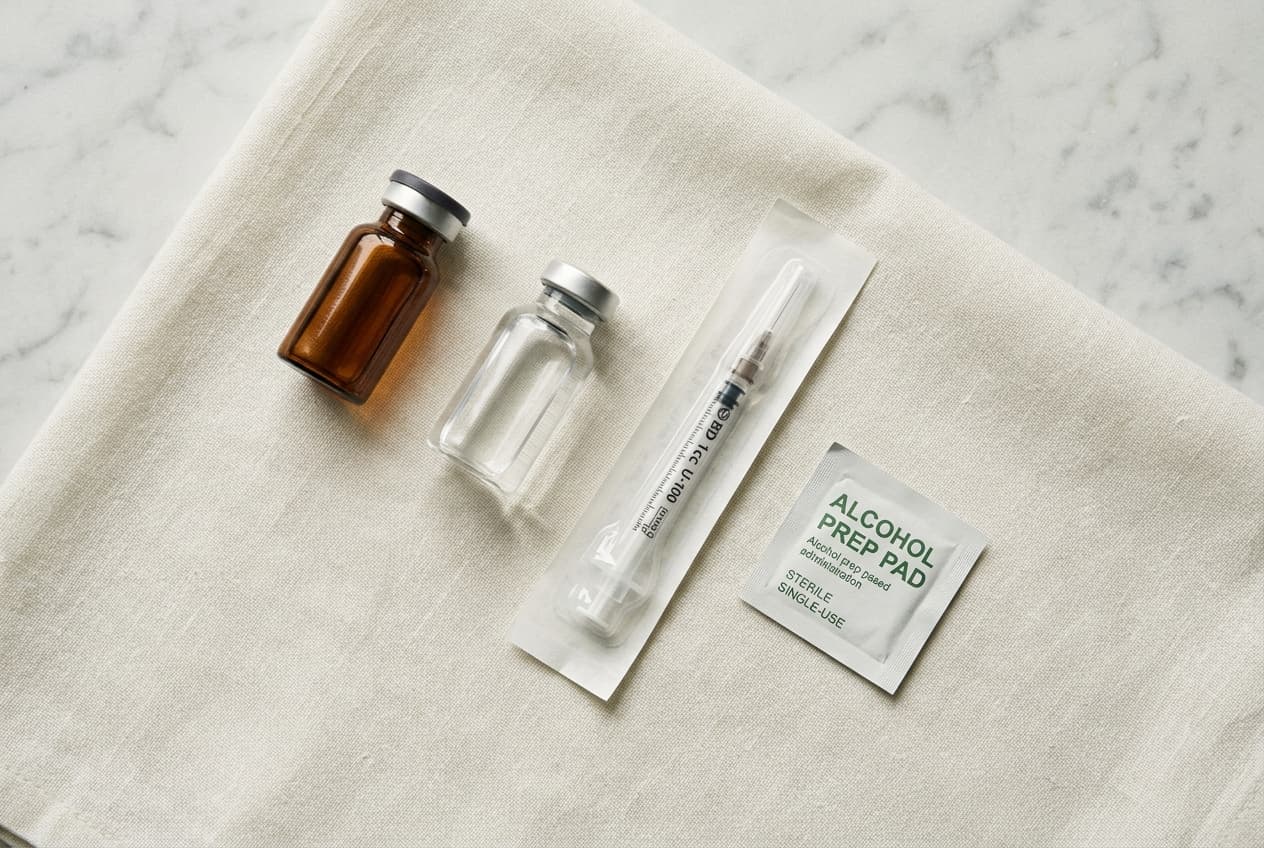
Research-grade vials are typically 5 mg lyophilised. Reconstitute with 2 ml bacteriostatic water for 2.5 mg/ml. A 0.3 mg starter dose draws 0.12 ml, or 12 units on a U-100 insulin syringe; 1.2 mg is 48 units; 2.4 mg is 96 units (which fills most U-100 syringes nearly to the line). Subcutaneous, once weekly, abdomen or thigh. Most users co-dose on the same day as their Semaglutide injection to keep injection days to a minimum.
Open calculator pre-filledStorage after reconstitution
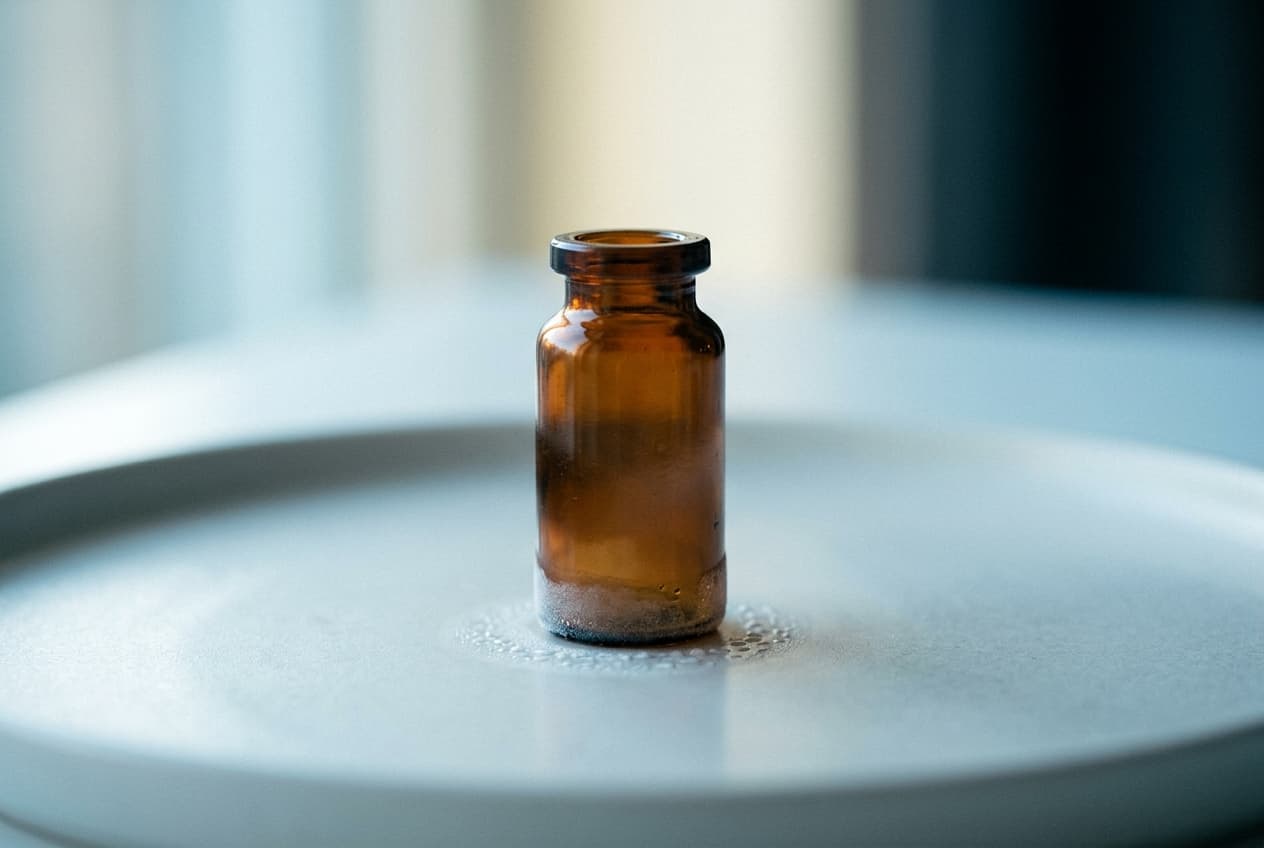
Refrigerate at 2 to 8 °C, light-protected, after reconstitution. Do not freeze. Stable 28 days in BAC water at fridge temperature. If you are running CagriSema (paired with Semaglutide), refrigerate both vials together and label them clearly. The amylin and GLP-1 components look identical in solution.
Cost & sourcing red flags
Typical price range: No approved standalone cagrilintide product as of 2026; it is being developed by Novo Nordisk almost exclusively as the cagrisema combo. Research-grade gray-market vials run $40 to 110 per 5 mg and $80 to 180 per 10 mg from peptide suppliers. Combo cagrilintide+semaglutide kits run $200 to 350 for matched 5+5 mg vials.
Red flags
- 5 mg vials under $30. Amylin analogues are synthetically expensive; legitimate API cost makes sub-$30 pricing implausible.
- Vendor cannot distinguish cagrilintide from pramlintide on the COA. The two are different amylin analogues with very different half-lives (cagrilintide ~7 days, pramlintide ~50 minutes); mass spec showing the correct ~6,151 Da molecular weight is the only reliable check.
- Marketing that promises GLP-1-class appetite suppression from cagrilintide monotherapy. The REDEFINE 1 data showed 11.5% weight loss with cagrilintide alone at 68 weeks. Meaningful but well below semaglutide's 14.9% and CagriSema's 20.4%. Vendors implying monotherapy parity are selling on hype.
- No reconstitution guidance specific to amylin analogues. Cagrilintide is more prone to fibrillation than GLP-1 peptides; suppliers omitting storage temperature and pH notes are not handling the molecule with the care it needs.
- Pre-mixed cagrilintide+semaglutide vials at significantly lower per-mg cost than buying the two separately. The Novo Nordisk CagriSema formulation is a fixed-ratio co-formulation under active patent; gray-market 'pre-mixed' kits are usually just two reconstituted peptides combined post-hoc, which sacrifices the stability profile of either component.
Pricing rots fast and varies by region and supplier. We list no vendors.
Common mistakes
Treating Cagrilintide as a Semaglutide alternative rather than a complement.
Better approach: As monotherapy it is solid but unremarkable. Roughly half the weight-loss effect of Semaglutide. The reason it exists is the combination story. If you are choosing between Cagrilintide alone and Semaglutide alone, pick Semaglutide. Choose Cagrilintide when you are building the combination or specifically want the amylin mechanism.
Escalating slowly because it is a peptide.
Better approach: Cagrilintide tolerates a faster titration than GLP-1 agonists. 2-week steps are standard rather than the 4-week incretin schedule. Going slower buys nothing except missed weeks.
Using a high dose alone hoping it will catch up to Semaglutide.
Better approach: The dose-response curve flattens above 2.4 mg in the monotherapy trial. Pushing higher does not deliver more loss; if 2.4 mg has plateaued, the next move is adding Semaglutide, not escalating Cagrilintide further.
Ignoring injection-site rotation because the volume is small.
Better approach: At 2.4 mg you are injecting almost a full ml. Repeated same-site injection produces small fibrotic lumps faster than you would expect. Rotate quadrants weekly.
Real-world tips
- If pairing with Semaglutide, dose both at the same time and inject into different sites (different abdominal quadrants or one abdomen and one thigh).
- The satiety signal feels different from GLP-1. Meals end earlier rather than starting smaller. Cook full-size portions and stop when full, rather than pre-portioning to the floor.
- Injection-site bumps respond to a cold compress for 5 to 10 minutes immediately after injection.
- Track the same metrics as for Semaglutide: weight weekly, waist monthly. The signal is subtler, so the longer baseline is more useful.
- If you are sensitive to GI side effects on incretins, Cagrilintide is often the gentler entry point. Many users start here before adding a GLP-1.
What users report
Aggregated from r/Peptides and amylin-focused forum threads. Small user base; most reports come from people stacking cagrilintide with semaglutide rather than running monotherapy.
Onset: Appetite suppression onset is slower than GLP-1 agonists. Users describe a gradual 'fullness lasts longer' effect building over 1 to 2 weeks rather than the immediate food-noise drop of semaglutide.
Common reports
- Slower gastric emptying experienced as 'meals stick longer'. Users report feeling full 4 to 6 hours after a small meal, where semaglutide-only users felt full but still cleared the meal normally.
- Less nausea than semaglutide at matched weight-loss outcome when used as part of the combo. The amylin mechanism reduces meal size more than it triggers gut-brain nausea pathways.
- Subjective 'taste shift'. Sweet foods read as too sweet, fatty foods read as cloying. Distinct from the more global 'food sounds gross' response some users get on high-dose semaglutide.
- Injection site reactions slightly more common than with semaglutide: small 1 to 2 cm itchy welts lasting 24 to 72 hours.
- Less alcohol-craving suppression than semaglutide. Users running cagrilintide alone often still want a drink; users stacking with semaglutide describe alcohol losing its appeal entirely.
- Standalone cagrilintide weight-loss trajectory is slower and more linear than semaglutide's front-loaded curve.
Where reports diverge from theory: REDEFINE 1 reported cagrilintide monotherapy at 11.5% weight loss across 68 weeks. Forum users running it solo often report disappointing results compared to the headline number. Likely because the trial protocol's titration and adherence were tighter than typical home use, and because users predisposed to amylin response self-select into the comparison.
When something else is the better tool
Semaglutide alone
Use instead when: You want the larger weight-loss effect from a single drug and have not specifically chosen the amylin mechanism. Semaglutide is the more parsimonious starting point.
CagriSema (the combination)
Use instead when: You want the full Cagrilintide story. The whole reason this molecule was developed is what happens when it pairs with Semaglutide; running it alone is leaving half the value on the table.
Pramlintide
Use instead when: You want the short-acting amylin tool for postprandial control rather than weight loss, and you are diabetic on insulin. Pramlintide is FDA-approved with a real safety record; Cagrilintide is investigational.
Based on 1 peer-reviewed study
- What is amylin and why does it matter?
- Amylin is a 37-amino-acid hormone co-secreted with insulin by pancreatic beta cells. It slows gastric emptying, suppresses glucagon release after meals, and signals satiety to the brainstem. Diabetic patients on long-term insulin become amylin-deficient, which is why pramlintide was developed; Cagrilintide is the long-acting version aimed at obesity.
- Will I lose weight on Cagrilintide alone?
- Yes, roughly 8 to 10% of body weight over six months at the top dose. That is meaningful but smaller than Semaglutide and substantially smaller than CagriSema.
- Is the combination FDA-approved?
- Not yet. CagriSema is in Phase 3 (REDEFINE programme) with results reported in 2025. Approval submissions are pending.
- Can I just take pramlintide instead?
- Pramlintide is approved and available, but it requires injection before every meal because of its short half-life. The whole point of Cagrilintide is the once-weekly dosing that fits the modern incretin schedule.
- Is the lower nausea real?
- In the published trials, yes. Discontinuation rates for GI side effects were lower than the GLP-1 comparator at matched weight-loss effect. Individual experience varies but the population signal is consistent.
Last updated:
Related peptides
Other compounds in this category
- SemaglutideThe GLP-1 receptor agonist that turned obesity pharmacology into a mainstream conversation. Once-weekly injection, ~7-day half-life, and the largest randomised dataset of anything in this catalogue.
- TirzepatideDual GIP and GLP-1 agonist. Beats Semaglutide head-to-head on weight loss and glycaemic control, and is becoming the default first-line choice when both are available.
- RetatrutideTriple agonist hitting GIP, GLP-1, and glucagon receptors at once. Phase 2 data shows the largest weight-loss numbers ever reported for a drug in trials. ~24% at 48 weeks.
- MazdutideChinese-developed GLP-1 / glucagon co-agonist (IBI362, licensed from Eli Lilly's LY3305677). Solid Phase 2 data, approved in China for diabetes in 2024, investigational elsewhere.
- CagriSemaOnce-weekly fixed-dose combination of Cagrilintide and Semaglutide. The leading 'next-generation' obesity treatment in Phase 3, delivering roughly 20% weight loss in late trials.
Head-to-head
Direct comparisons with similar peptides