

AOD9604
Also known as: Anti-Obesity Drug 9604
A short fragment of human growth hormone (residues 177-191) that was sold the lipolytic tail of HGH without the growth signal. The marketing outpaced the trial data by a wide margin.
Overview
AOD9604 is a 15-amino-acid tail-end of HGH that Metabolic Pharmaceuticals took into Phase 2 obesity trials in the 2000s. The pitch was elegant: keep the fat-burning bit of growth hormone, strip the IGF-1 arm, and you get a lean-out tool with none of the carpal tunnel or glucose problems. The trials missed their primary endpoint. The company shelved the obesity programme, the molecule got rebranded as a research peptide, and surviving anecdotal use is mostly people who tried it once, felt nothing dramatic, and moved on. AOD has TGA approval in Australia as a food supplement adjunct, which is not the same as efficacy data.[1]
Evidence quality
Metabolic Pharmaceuticals ran Phase 2a and 2b obesity trials in the early 2000s; the published data showed weight changes that did not separate convincingly from placebo at 12 and 24 weeks. The lipolytic mechanism is real in isolated adipocyte preparations. The translation to clinically meaningful fat loss in vivo is what the human data did not deliver. Anything you read selling AOD9604 as a fat-burner is selling the mechanism, not the trial results.
Benefits & timeline
Benefits
- Mild support for fat oxidation when paired with fasted morning training
- No appetite suppression and no growth-hormone-like side effects (no carpal tunnel, no insulin sensitivity issues at clinical doses)
- Daily microdosing is well tolerated; injection-site reactions are uncommon
- Reasonable adjunct in a stack with appetite-suppression tools like Semaglutide where the lipolytic arm is genuinely missing
Timeline
Week 1-2
Nothing felt subjectively. Do not expect a stimulant-like edge.
Week 4
If anything is happening, it shows up as a slightly easier fasted cardio session, not on the scale.
Week 8
The honest checkpoint. If the tape measure has not moved, more weeks will not fix it.
Week 12
End of standard cycle. Stop and reassess.
Off-cycle
4 weeks off. Most users do not feel a regression because the effect was modest to begin with.
Dosage protocols

Advanced
1000 mcg
daily AM, fasted
Beginner
250 mcg
daily AM
Standard
500 mcg
daily AM, fasted
Titration & adjustment
Most users start at the standard 250 to 300 mcg dose from day one. There is no GI titration to manage. If injection-site irritation appears, halve the dose for a week and then resume full dose. No taper required when stopping; effect simply fades over ~1 to 2 weeks.
Injection timing

Best dosed in the morning on an empty stomach (at least 30 minutes before food). Lipolysis is most active during the fasted state, so AM dosing pairs well with morning fasted cardio. Do not stack with high-carb breakfast within 30 minutes of injection. Insulin spikes blunt the effect.
Side effects & contraindications

- mildOccasional injection-site redness for an hour or two.
- mildSome users report transient headache in the first few days; usually resolves without dose change.
- moderateThe original Phase 2 obesity trial missed its primary efficacy endpoint. The compound was abandoned for that indication, which is itself a side-effect of the evidence base you should weigh.
Contraindications
- Pregnancy or breastfeeding - no data
- Pediatric use - no data and no plausible indication
- Active malignancy - while AOD lacks the IGF-1 arm of HGH, residual proliferative signalling has not been ruled out in humans
- Severe insulin resistance - not because AOD causes it, but because the population that wants AOD is often the population that needs a GLP-1, not this
Reconstitution & injection
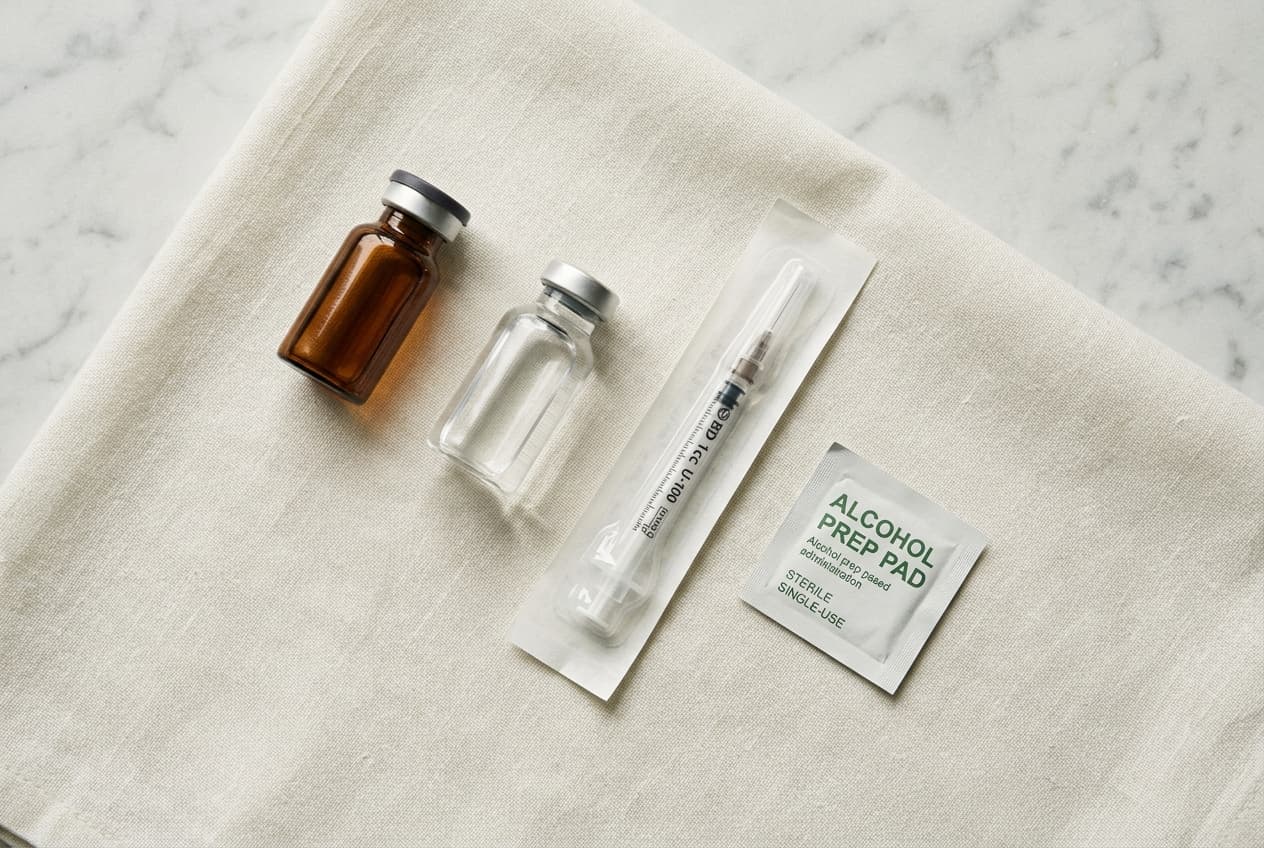
Standard vial is 5 mg. Mix with 2 ml bacteriostatic water to give 2.5 mg per ml. A 250 mcg dose is 0.1 ml, which is 10 units on a U-100 insulin syringe. Subcutaneous into the abdomen, morning fasted. Refrigerate after reconstitution; the peptide is reasonably stable for 4 weeks in BAC water at fridge temperature.
Open calculator pre-filledStorage after reconstitution
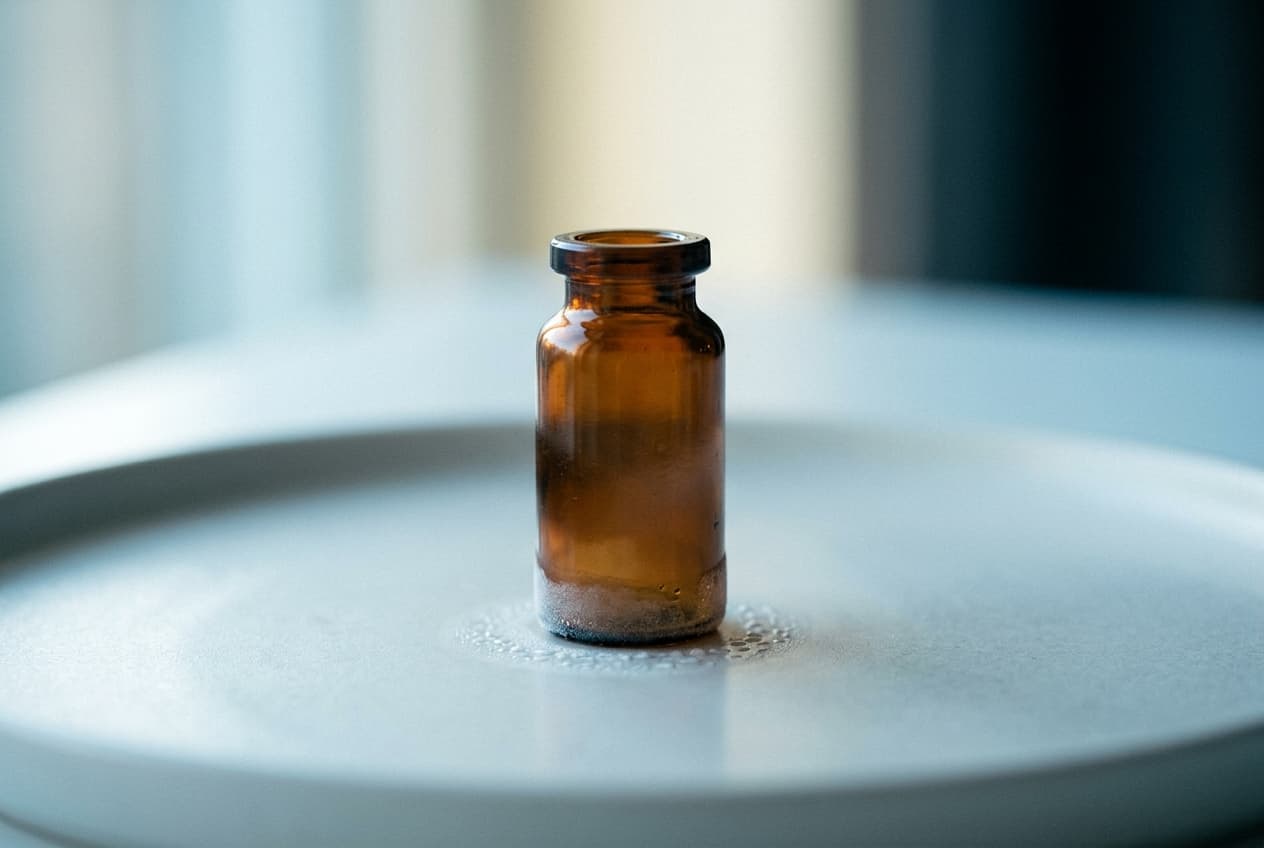
Refrigerate at 2 to 8 °C after reconstitution. Do not freeze. Light-protected. AOD9604 (HGH 176-191 fragment) is less stable than full-length somatropin in solution. Usable potency is realistically 2 to 3 weeks at fridge temperature. Mix smaller batches if you dose infrequently; do not over-dilute and stretch one vial across 6 weeks.
Cost & sourcing red flags
Typical price range: $25 to 60 per 5 mg vial from research-grade suppliers. A typical 12-week protocol at 300 mcg/day burns through 2 to 3 vials, so $50 to 180 in raw material per cycle.
Red flags
- 5 mg vials priced under $15. AOD9604 synthesis is straightforward for legitimate labs, but bargain pricing on a peptide with weak demand often signals scaled-back QC or expired stock being cleared.
- No batch-specific HPLC certificate of analysis. A generic 'AOD9604 >98%' PDF reused across every batch is not a COA. Ask for the chromatogram and mass-spec trace tied to the lot number on your vial.
- Vendor confusion between AOD9604 and 'HGH Fragment 176-191'. They are not the same molecule. AOD9604 has a tyrosine extension at the N-terminus that the unmodified fragment lacks. Listings that swap the names interchangeably suggest the vendor either does not know or does not care.
- Vials arriving as a clear liquid rather than a white lyophilised cake. Properly lyophilised AOD9604 is a fluffy white powder; a clear or oily residue points to failed lyophilisation or pre-reconstitution.
- Oral or transdermal AOD9604 products marketed for fat loss. AOD9604 is degraded in the gut and has negligible transdermal absorption. Oral lozenges and creams sold at clinic markup are essentially placebo.
Pricing rots fast and varies by region and supplier. We list no vendors.
Common mistakes
Expecting Semaglutide-grade results from AOD9604.
Better approach: These two are in different leagues. If your goal is meaningful weight loss, the GLP-1 incretins are the tool. AOD is at best a marginal adjunct in a stack already doing the heavy lifting through diet and training.
Dosing AOD with a high-carb breakfast right after the injection.
Better approach: Insulin blunts lipolysis. The whole point of the morning fasted dose is to ride the body's own catecholamine-driven fat-burning window. Inject, do 30-45 minutes of low-intensity cardio fasted, then eat.
Running it for 24 weeks at a time hoping the effect builds.
Better approach: There is no evidence that longer cycles produce bigger results. Stick to 8-12 weeks on, 4 weeks off. If the scale has not moved by week 8, the molecule is not the bottleneck.
Treating the 500 mcg or 1 mg doses as obviously better than 250 mcg.
Better approach: The dose response is shallow in the trial data. 250-300 mcg daily is the most-studied range. Going higher rarely improves outcomes and just burns through vials faster.
Real-world tips
- Inject before fasted cardio, not after. Lipolysis is most active during the catecholamine-rich early-morning fasted state.
- Keep a tape measure and a weekly photo log. AOD's effect, if present, is subtle and you will gaslight yourself either way without objective markers.
- Do not stack with high-stim pre-workouts in the same hour - they don't conflict mechanistically, but you will not be able to tell what is doing what.
- Rotate injection sites across the lower abdomen. The molecule is gentle but local lipoatrophy from repeated same-site injections has been reported with other peptides.
- If you are also on Semaglutide or Tirzepatide, AOD is at best a small percentage on top. Do not budget it as a primary tool.
What users report
Aggregated from r/Peptides, bodybuilding forums, and clinic blog testimonials. Not clinical data.
Onset: Most users describe no acute felt effect at all; if anything happens, it shows up as a slow trend in waist measurements over 8 to 12 weeks of daily dosing.
Common reports
- Slight reduction in stubborn abdominal fat over a 12-week course, typically 1 to 3 kg above what diet alone would have produced. Many users report no measurable change at all.
- Occasional mild headache in the first week of daily injections, usually resolving without intervention.
- Injection-site reactions are minor. Small wheal that fades within an hour. Reported as gentler than CJC-1295 or tesamorelin.
- No appetite suppression, no euphoria, no felt 'kick'. Users frequently describe it as 'the most placebo-feeling peptide I have run'.
- Cycles run alongside aggressive caloric deficit and fasted morning cardio produce the loudest positive reports; cycles run at maintenance calories produce the loudest 'nothing happened' reports.
Where reports diverge from theory: The marketing pitch leans on the 2004 lipolysis trials in obese adults. What is often left out: Metabolic Pharmaceuticals' Phase IIb confirmatory trial failed to replicate statistically significant weight loss versus placebo, and the company shelved the drug program in 2007. Forum reports broadly track that result. The modal experience is 'no felt effect, hard to tell on the scale'. The peptide may still produce isolated lipolysis in adipocytes; what it does not reliably do in humans is move body composition without an aggressive concurrent deficit.
When something else is the better tool
Semaglutide or Tirzepatide
Use instead when: Your goal is clinically meaningful weight loss. The GLP-1 incretins have Phase 3 data showing 15-20 percent body weight reduction. AOD has Phase 2 data showing a non-significant trend. The two are not in the same conversation.
Fasted morning cardio with no peptide
Use instead when: Honestly, for most users. The behavioural change of consistent fasted training delivers more reliable fat loss than AOD ever did in trials. Add the peptide only if you are already doing the boring work and want to test a marginal lever.
Tesamorelin
Use instead when: The fat you want to lose is specifically visceral. Tesamorelin has FDA approval for visceral adiposity in HIV-associated lipodystrophy with real outcome data. Different mechanism, different evidence quality, different price.
Based on 1 peer-reviewed study
- Is AOD9604 a peptide?
- Technically yes. A 15-amino-acid fragment of HGH. Marketing groups it with peptides, but it has none of the growth-promoting activity of full-length HGH. Lipolytic fragment, not a growth fragment.
- Will it suppress my own HGH?
- No. It does not bind the GH receptor in the feedback loop. Part of the safety pitch, and probably part of why the lipolytic effect is so modest in vivo.
- Why did the trials fail?
- Phase 2 obesity trials missed their primary weight-loss endpoint. The mechanism worked in isolated cells, but the in-vivo signal in humans was not strong enough to justify Phase 3. The sponsor pivoted to a food-supplement framing in Australia.
- Worth running it solo?
- Probably not. If you are already training fasted and eating in a deficit, the marginal effect is unlikely to be visible. If you are not, no peptide will compensate.
- Can I oral-dose it?
- An oral lozenge is approved as a food supplement in Australia, but oral bioavailability of a 15-amino-acid peptide is poor. Subcutaneous is the route used in actual trials.
Last updated:
Related peptides
Other compounds in this category
- SemaglutideThe GLP-1 receptor agonist that turned obesity pharmacology into a mainstream conversation. Once-weekly injection, ~7-day half-life, and the largest randomised dataset of anything in this catalogue.
- TirzepatideDual GIP and GLP-1 agonist. Beats Semaglutide head-to-head on weight loss and glycaemic control, and is becoming the default first-line choice when both are available.
- RetatrutideTriple agonist hitting GIP, GLP-1, and glucagon receptors at once. Phase 2 data shows the largest weight-loss numbers ever reported for a drug in trials. ~24% at 48 weeks.
- MazdutideChinese-developed GLP-1 / glucagon co-agonist (IBI362, licensed from Eli Lilly's LY3305677). Solid Phase 2 data, approved in China for diabetes in 2024, investigational elsewhere.
- CagriSemaOnce-weekly fixed-dose combination of Cagrilintide and Semaglutide. The leading 'next-generation' obesity treatment in Phase 3, delivering roughly 20% weight loss in late trials.