

CagriSema
Also known as: CagriSema · Cagrilintide + Semaglutide
Once-weekly fixed-dose combination of Cagrilintide and Semaglutide. The leading 'next-generation' obesity treatment in Phase 3, delivering roughly 20% weight loss in late trials.
Overview
CagriSema pairs Novo Nordisk's two molecules at matched doses in a single weekly injection. Amylin and GLP-1 operate through non-overlapping satiety pathways, so the effect adds rather than redundantly stacks on top of GLP-1 alone. REDEFINE 1 (NEJM 2025) showed 22.7% weight loss at 68 weeks in adults with obesity without diabetes, vs ~15% for Semaglutide alone at 2.4 mg. The headline was softer than analyst expectations (the rumour mill wanted 25%), a useful reminder that head-to-head versus Tirzepatide is the comparison Novo would not put on the slide. Still approval-track and a serious contender.[1]
Evidence quality
Novo Nordisk's REDEFINE Phase 3 programme covers REDEFINE 1 (obesity without diabetes), REDEFINE 2 (obesity with type 2 diabetes), and REDEFINE 3 (cardiovascular outcomes). REDEFINE 1 reported in 2025 (NEJM) showed 22.7% weight loss at 68 weeks vs 15% for Semaglutide alone. Approval submissions are pending. The combination has not been compared head-to-head with Tirzepatide or Retatrutide.
Benefits & timeline
Benefits
- Roughly 20 to 23% body-weight reduction at full dose over 68 weeks in REDEFINE 1
- Better GI tolerability at matched weight loss than escalated Semaglutide monotherapy
- Single weekly injection. Both components in one syringe
- Strong glycaemic control for users with concurrent type 2 diabetes
Timeline
Week 1 to 4
Titration at 0.25 mg of each component. Mild GI side effects, mostly nausea.
Week 8 to 12
Climbing in 4-week steps through 0.5 → 1.0 → 1.7 mg. Steady weight loss begins.
Week 16 to 24
On 1.7 mg or stepping to 2.4 mg. Loss accelerating; the dual mechanism is now fully expressed.
Week 36 to 52
On 2.4 mg target dose. Most rapid weight-loss period; lean-mass protection becomes critical.
Week 68+
REDEFINE 1 endpoint. ~20 to 23% loss achieved; transition to maintenance or continue at full dose.
Dosage protocols

Advanced
2.4 mg
once weekly (each component)
Target Phase 3 dose.
Beginner
0.25 mg
once weekly (each component)
Titration: 0.25 mg each of Cagrilintide and Semaglutide.
Standard
1.7 mg
once weekly (each component)
Titration & adjustment
Match-dose titration: both Cagrilintide and Semaglutide start at 0.25 mg weekly and escalate together. 0.5 → 1.0 → 1.7 → 2.4 mg every 4 weeks. If GI side effects only appear at a specific step, hold that step for 4 weeks before advancing. To stop: taper both components together in 0.5 mg steps every 2 weeks.
Injection timing

Once weekly, both components together in one syringe. Morning preferred. Do not split into two injections on different days. The convention is co-administration so receptor exposure peaks simultaneously.
Side effects & contraindications

- moderateGI symptoms (nausea, constipation, reflux). Generally similar to Semaglutide alone, sometimes milder despite stronger effect.
- mildReduced appetite to an uncomfortable degree in users sensitive to either component.
- mildInjection-site reactions, more common than with Semaglutide alone.
- severeSame MTC and pancreatitis warnings as Semaglutide. The GLP-1 component carries the entire class risk profile.
- moderateLean-mass loss risk scales with the speed of weight loss, which is faster than monotherapy.
Contraindications
- Personal or family history of medullary thyroid carcinoma or MEN-2 syndrome
- Active pancreatitis or recent gallbladder disease
- Pregnancy or active conception attempts. Washout at least 2 months
- Severe gastroparesis
- Type 1 diabetes outside research protocols
Reconstitution & injection
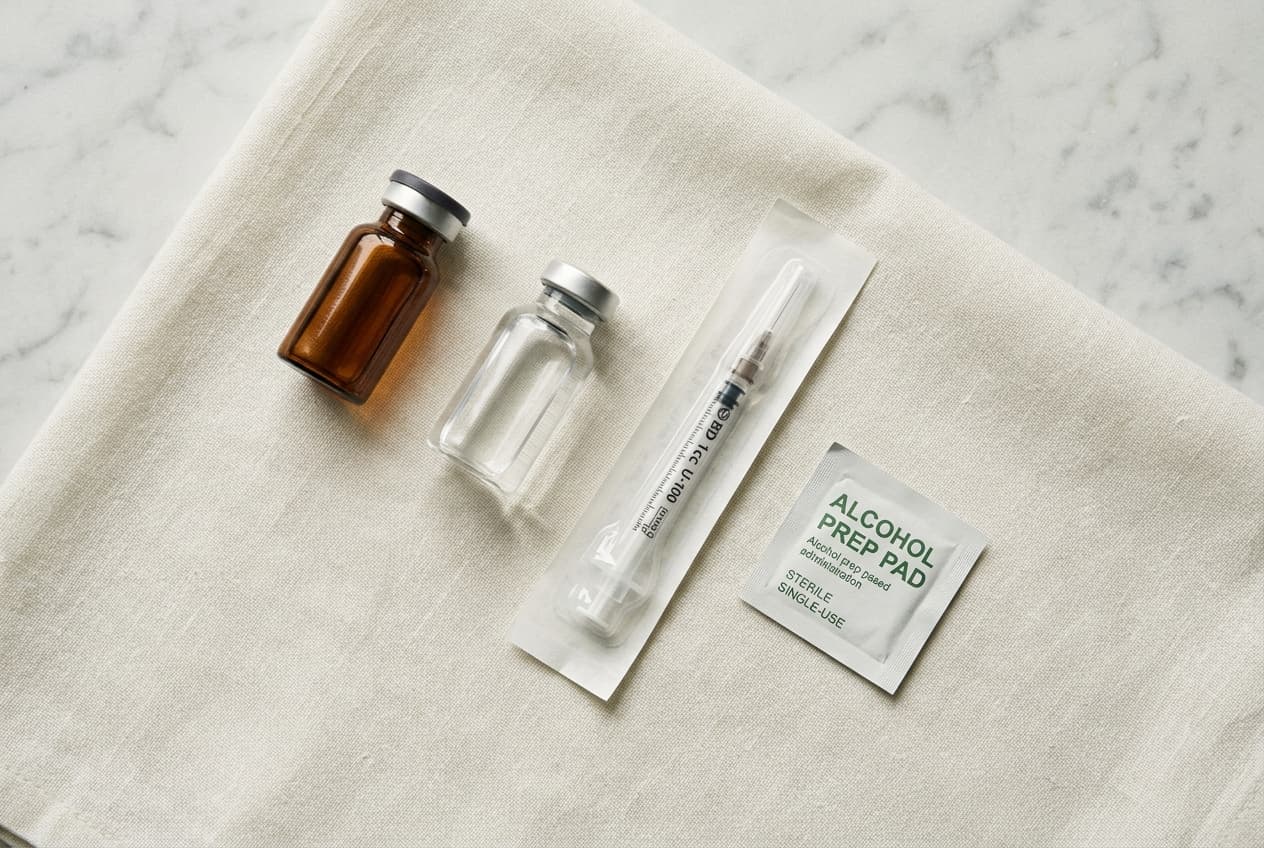
Novo's clinical trial product is a fixed-dose pen with both molecules pre-mixed. For research-grade users, dose each component separately from its own vial and draw both into a single syringe before injection. With Semaglutide reconstituted at 2.5 mg/ml and Cagrilintide at 2.5 mg/ml, a matched 1.7 mg dose is 0.68 ml of each. 68 units of each on a U-100 syringe (you will need two syringes or a larger barrel). Subcutaneous, once weekly, single injection site for the combined volume.
Open calculator pre-filledStorage after reconstitution
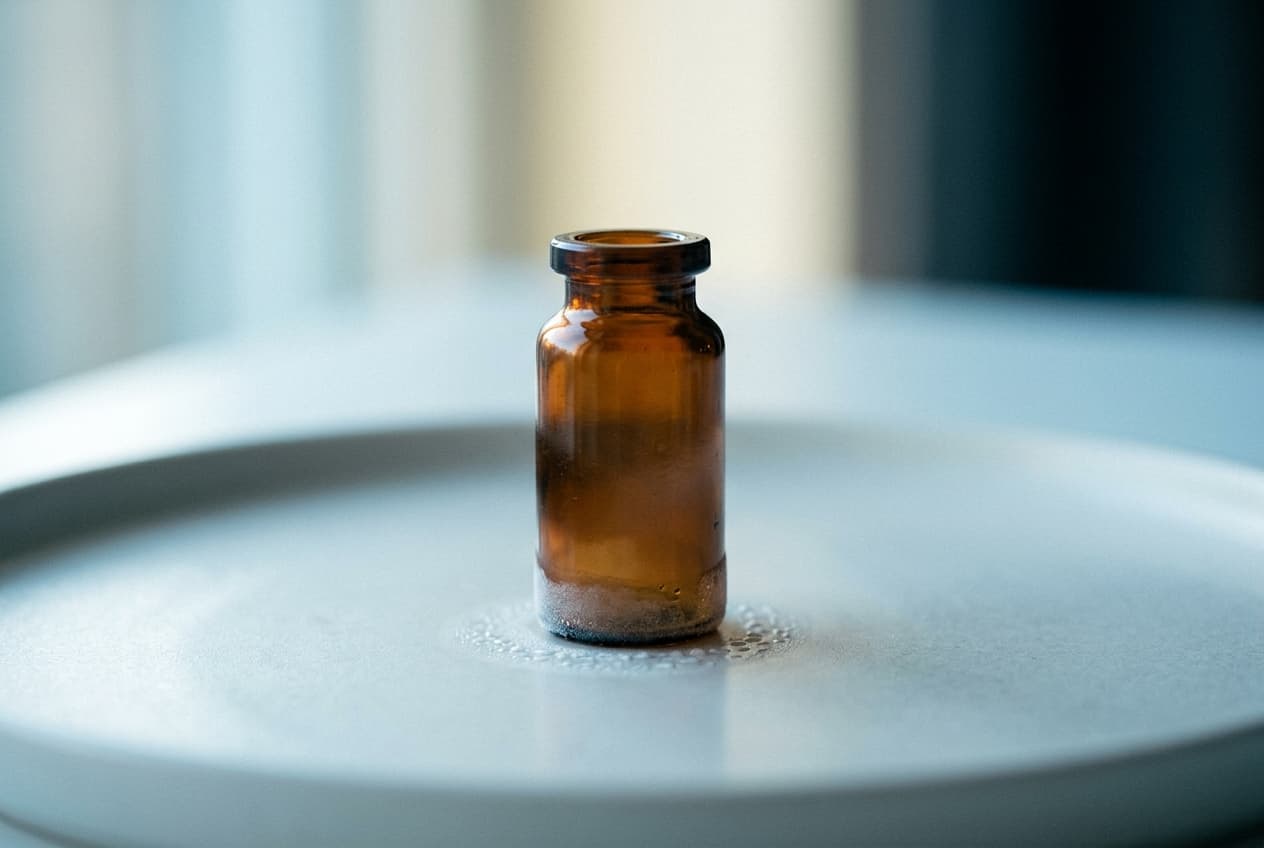
Both component vials (Cagrilintide + Semaglutide) refrigerate at 2 to 8 °C after reconstitution. Do not freeze either. Light-protected. Each vial holds 28 days of potency at fridge temperature. Label them clearly. The two clear, colourless solutions are visually identical and the doses are not interchangeable.
Cost & sourcing red flags
Typical price range: Not yet approved as of 2026; expected Novo Nordisk launch pending FDA filing. Gray-market 'cagrisema' kits (cagrilintide 5 mg + semaglutide 5 mg in matched vials) run $200 to 350 from research peptide suppliers; some vendors sell pre-mixed single vials at similar price points.
Red flags
- Anyone selling 'cagrisema' as a single co-formulated vial outside Novo Nordisk clinical trials. The proprietary fixed-ratio co-formulation does not exist commercially; gray-market 'cagrisema' is invariably the two peptides packaged together, with no proven stability data for the combined solution.
- Pricing under $150 for a matched 5 mg + 5 mg kit. Cost of authentic API for both components together makes sub-$150 implausible without substitution.
- Vendor cannot show separate batch COAs for the cagrilintide and the semaglutide components. Bundled COAs that just say 'cagrisema 99% pure' are not analytical certificates.
- Instructions to reconstitute and mix both peptides into a single syringe. The Novo Nordisk co-formulation uses a specific pH and excipient mix to keep both peptides stable; user-mixed combos in bacteriostatic water start degrading faster, especially the cagrilintide arm.
- Marketing claims of '25%+ weight loss' citing REDEFINE 1 data. The trial's 20.4% mean at 68 weeks under tight protocol adherence is meaningfully different from what most users will achieve with gray-market product and self-titration.
- Telehealth providers prescribing 'compounded cagrisema'. There is no legitimate 503A pathway for a co-formulation of two unapproved-in-combination peptides.
Pricing rots fast and varies by region and supplier. We list no vendors.
Common mistakes
Treating it as 'just Semaglutide plus a little extra'.
Better approach: The combined effect is substantially stronger than Semaglutide alone, and the speed of loss creates lean-mass risk that low-dose Semaglutide does not. Treat the protein, training, and weighing discipline as you would for Tirzepatide at top dose, not as a casual add-on to your existing Semaglutide routine.
Dosing the two components on different days.
Better approach: The trial design and the convention is co-administration. Amylin and GLP-1 receptor activation are intended to peak together. Splitting the days adds complexity without evidence of benefit.
Skipping the matched titration and starting both at full dose.
Better approach: The trial protocol escalates both components in parallel every 4 weeks. Starting either at full dose creates GI distress that is hard to attribute to the right component when you have to back off. Match the titration.
Choosing CagriSema before maxing Semaglutide.
Better approach: If you have not been on the 2.4 mg Semaglutide dose for at least 16 weeks, you do not yet know whether monotherapy would have got you to the target. CagriSema is the next step for users who have plateaued, not the first step for anyone new to incretins.
Real-world tips
- Use one syringe with both peptides combined. Draw the Semaglutide first, then the Cagrilintide. Inject within 30 minutes of mixing.
- Inject site rotation matters more here because of the larger combined volume. Run a four-week quadrant rotation across the abdomen.
- Lean into resistance training. The faster weight loss is the variable that makes lean-mass loss more likely.
- Track waist and weight weekly. The CagriSema curve is steeper than Semaglutide's, and tracking weekly makes plateaus visible earlier.
- If GI symptoms appear, identify which component is responsible by dropping one at a time. Usually it is the Semaglutide arm that needs the slower titration.
What users report
Aggregated from r/Peptides and gray-market GLP-1 forums. Most reports come from users transitioning off semaglutide or tirzepatide and adding cagrilintide.
Onset: Combo users describe two distinct onset patterns: the semaglutide component delivers food-noise reduction within 24 to 72 hours, and the cagrilintide component layers on 'meals last longer' fullness over 1 to 2 weeks.
Common reports
- Stronger appetite suppression than semaglutide alone at matched semaglutide dose. Users describe a 'full belly with no thoughts about food' state that semaglutide monotherapy did not produce.
- Less head-spinning nausea than tirzepatide for users switching across, despite similar weight-loss trajectory. The amylin component appears to reduce meal volume without triggering as much GI distress.
- Slower onset of plateau than semaglutide monotherapy. Users who stalled on 1.7 to 2.4 mg semaglutide and added cagrilintide often report another 2 to 4 kg over 6 to 8 weeks.
- Sweet-food aversion strong; users describe diet drinks tasting metallic and desserts tasting nauseatingly sweet.
- Injection burden. Two separate weekly injections from gray-market kits is a real adherence problem; users frequently mix in one syringe despite the stability concern.
- Energy levels better than on high-dose semaglutide monotherapy at matched weight-loss rate. Forum hypothesis: dropping the semaglutide to 1.0 to 1.7 mg while running cagrilintide preserves training capacity.
Where reports diverge from theory: The REDEFINE 1 trial used a fixed-ratio Novo Nordisk co-formulation with controlled stability. Forum users mix their own pseudo-CagriSema from two vials, often into a single syringe, and report results that vary widely with technique. The 20.4% headline weight loss number is rarely matched outside controlled adherence; 12 to 16% over 6 to 9 months is the more realistic forum median.
When something else is the better tool
Semaglutide monotherapy
Use instead when: You are early in your weight-loss journey and 15% body-weight loss would meet your goal. The simpler protocol, the larger safety database, and the (often) lower cost make Semaglutide the cleaner first move.
Tirzepatide
Use instead when: You want comparable weight-loss effect from a single approved drug with insurance coverage and a single pen rather than two vials. Tirzepatide delivers similar numbers via a different mechanism (GIP plus GLP-1).
Retatrutide
Use instead when: You want the maximum-effect investigational route and are comfortable with research-grade material. Phase 2 Retatrutide reported ~24% at 12 mg; CagriSema reported ~23% at full dose. The two are in the same ballpark with different mechanistic profiles.
Based on 1 peer-reviewed study
- Is CagriSema better than Tirzepatide?
- Probably not by much, and they have not been compared head-to-head. REDEFINE 1 showed ~23% at 68 weeks; SURMOUNT-1 showed ~21% at 72 weeks. Mechanism preference, supply, and cost are the right tiebreakers.
- Can I make my own CagriSema by buying both vials?
- Yes. This is how research-grade users access it today. Pharmacology is identical; purity and exact concentration are the variables you cannot verify. Ask suppliers for HPLC assays on both components.
- When will it be approved?
- REDEFINE 1 results dropped in 2025 and Novo Nordisk indicated regulatory submissions to follow. A 2026 to 2027 approval timeline is plausible if data review proceeds without issues.
- Was the trial result disappointing?
- Market analysts wanted 25%; the trial delivered 22.7%. As a scientific result it is excellent. As an investor narrative it was perceived as a miss. Clinically, it is one of the best obesity readouts ever published.
- Do I need to inject twice if I am using research-grade vials?
- No. Combine both peptides in one syringe before injection. Drawing both at the right ratio is the trickiest part; if you make a math error, drop both doses for that week rather than guess.
Last updated:
Related peptides
Other compounds in this category
- SemaglutideThe GLP-1 receptor agonist that turned obesity pharmacology into a mainstream conversation. Once-weekly injection, ~7-day half-life, and the largest randomised dataset of anything in this catalogue.
- TirzepatideDual GIP and GLP-1 agonist. Beats Semaglutide head-to-head on weight loss and glycaemic control, and is becoming the default first-line choice when both are available.
- RetatrutideTriple agonist hitting GIP, GLP-1, and glucagon receptors at once. Phase 2 data shows the largest weight-loss numbers ever reported for a drug in trials. ~24% at 48 weeks.
- MazdutideChinese-developed GLP-1 / glucagon co-agonist (IBI362, licensed from Eli Lilly's LY3305677). Solid Phase 2 data, approved in China for diabetes in 2024, investigational elsewhere.
- CagrilintideLong-acting amylin analogue for once-weekly dosing. Useful on its own; dramatically more useful paired with Semaglutide as the CagriSema combination.