

TB-500
Also known as: Thymosin Beta-4 · TB-4
A synthetic fragment of Thymosin Beta-4 used for systemic tissue repair. Sister peptide to BPC-157, but where BPC works locally, TB-500 spreads.
Overview
TB-500 is the synthetic active region of Thymosin Beta-4, a small protein your body uses to regulate actin polymerisation, cell migration, and angiogenesis during repair. Where BPC-157 is best dosed close to the injury, TB-500 distributes systemically. That makes it the more honest pick for users with overlapping injuries, generalised training-overload pain, or post-surgical recovery where there isn't a single site to target. The protocol is unusual in one specific way: tissue stores build up gradually, so a loading phase of twice-weekly higher doses for 4 to 6 weeks is conventional, then a maintenance taper. Rushing the loading phase doesn't accelerate the effect; the cells need time to express the new actin-regulation patterns. The catch is the same as BPC-157: animal data is broad, human data is anecdotal, and the racehorse-doping literature is informative but not human.[1]
Evidence quality
Animal data is substantial. TB-500's parent protein Thymosin Beta-4 has been studied in wound healing, cardiac repair, and neural regeneration for decades. The 2012 Goldstein and Hannappel review covers the preclinical body of work. Human data is essentially absent: a small Phase 2 trial in dry-eye disease (RegeneRx) showed signal but didn't lead to approval, and the racehorse-doping literature is informative but not human-clinical. Use anecdotal-plus-animal as your evidence floor, not as a substitute for the missing human RCTs.
Benefits & timeline
Benefits
- Systemic tissue repair. Useful for users with multiple small injuries, training overload, or post-surgical recovery where there's no single site to target
- Accelerates wound healing and angiogenesis in animal models, with consistent signal across species
- Often paired with BPC-157 as the systemic side of a recovery stack. The two appear to work on complementary mechanisms
- Anecdotal reports of hair quality and skin improvements during longer cycles, likely secondary to general tissue-repair effects
Timeline
Week 1 to 2 (loading)
Twice-weekly dosing at 5 mg. Most users feel a mild lethargy as the body redirects energy to repair processes.
Week 3 to 4
Lethargy fades. Recovery between hard training sessions starts to feel measurably faster.
Week 6
Loading phase complete. Most reported benefits realised. Drop to maintenance (5 mg once weekly) or cycle off.
Week 8
Plateau on maintenance dosing. Beyond this point, more doses rarely add benefit.
Off-cycle
At least 6 weeks off before another loading phase. Tissue stores persist longer than serum levels suggest. Rushing back in costs vials, not effect.
Dosage protocols
Advanced
10 mg
twice weekly
Beginner
2 mg
twice weekly
Standard
5 mg
twice weekly
Titration & adjustment
Loading phase: 5 mg twice weekly for 4 to 6 weeks. After loading, drop to 5 mg once weekly for maintenance. Or stop entirely. Tissue stores build up gradually; rushing the loading phase does not accelerate effects. Cycle off for at least 6 weeks before another loading phase.
Injection timing

Twice weekly during loading. Subcutaneous; site does not matter because the effect is systemic. After loading, maintenance once weekly. Time of day is flexible.
Side effects & contraindications

- mildLethargy in the first week. The body redirecting metabolic energy toward repair. Resolves on its own.
- mildHeadache or generalised muscle ache during loading, similar to a mild flu day.
- mildInjection-site reaction. Small bump for under 24 hours.
- moderateLong-term human safety data is essentially absent. Decades of grey-market use without major signal, but 'no signal yet' is not 'safe long-term'.
Contraindications
- Active cancer or recent cancer history. Angiogenesis and cell migration are the exact mechanisms a tumour would benefit from
- Pregnancy or breastfeeding
- Recent major surgery without clearance from the operating clinician
- Caution with anticoagulants given the angiogenic component
Reconstitution & injection
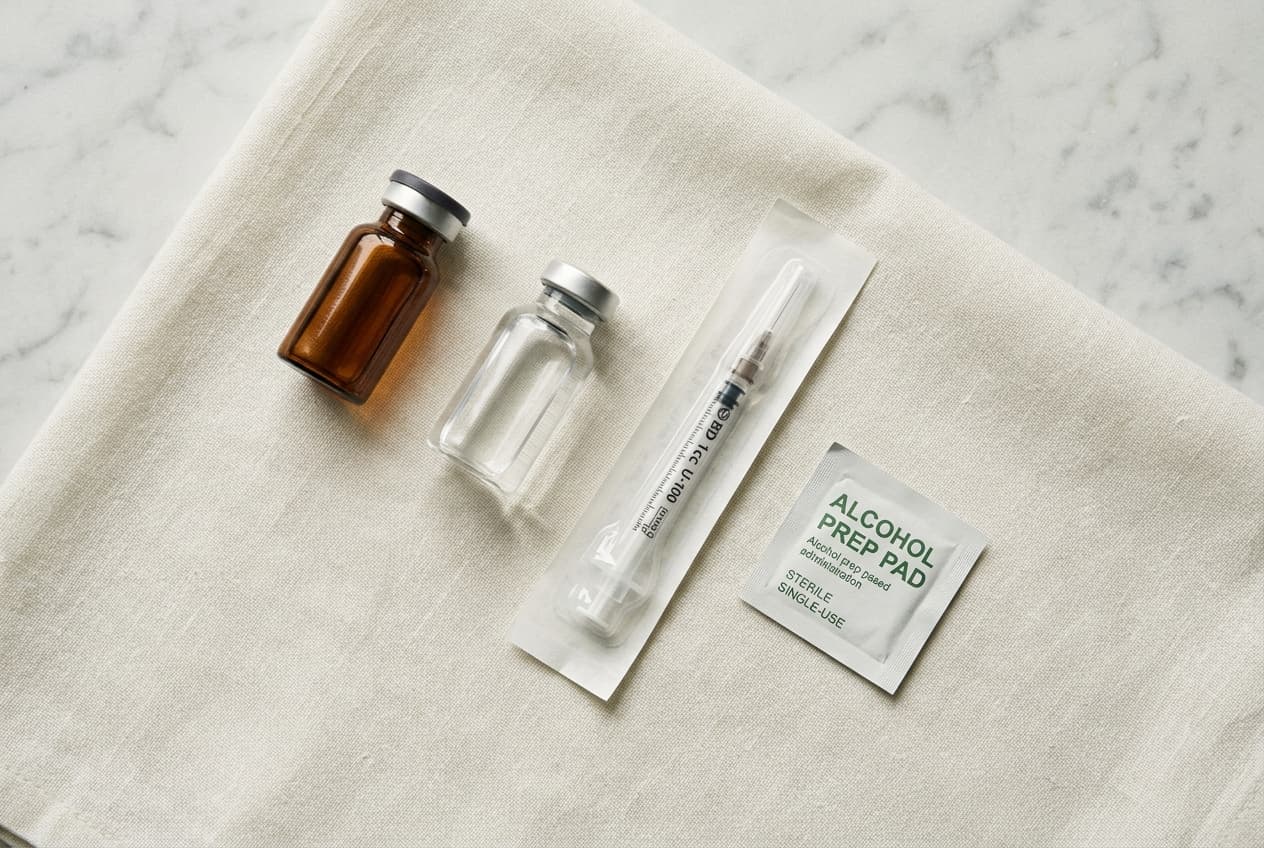
A 10 mg vial mixed with 2 ml bacteriostatic water gives 5 mg per ml. A 5 mg dose is 1 ml, which is 100 units on a U-100 insulin syringe (the full syringe, use a 1 ml syringe if available, or split into two 50-unit injections). A 2 mg starter dose is 0.4 ml or 40 units. Subcutaneous into abdomen or thigh. Site doesn't matter because the effect is systemic. Refrigerate after reconstitution; stable for 30+ days at fridge temperature in bacteriostatic water. Rotate injection sites to avoid local irritation.
Open calculator pre-filledStorage after reconstitution
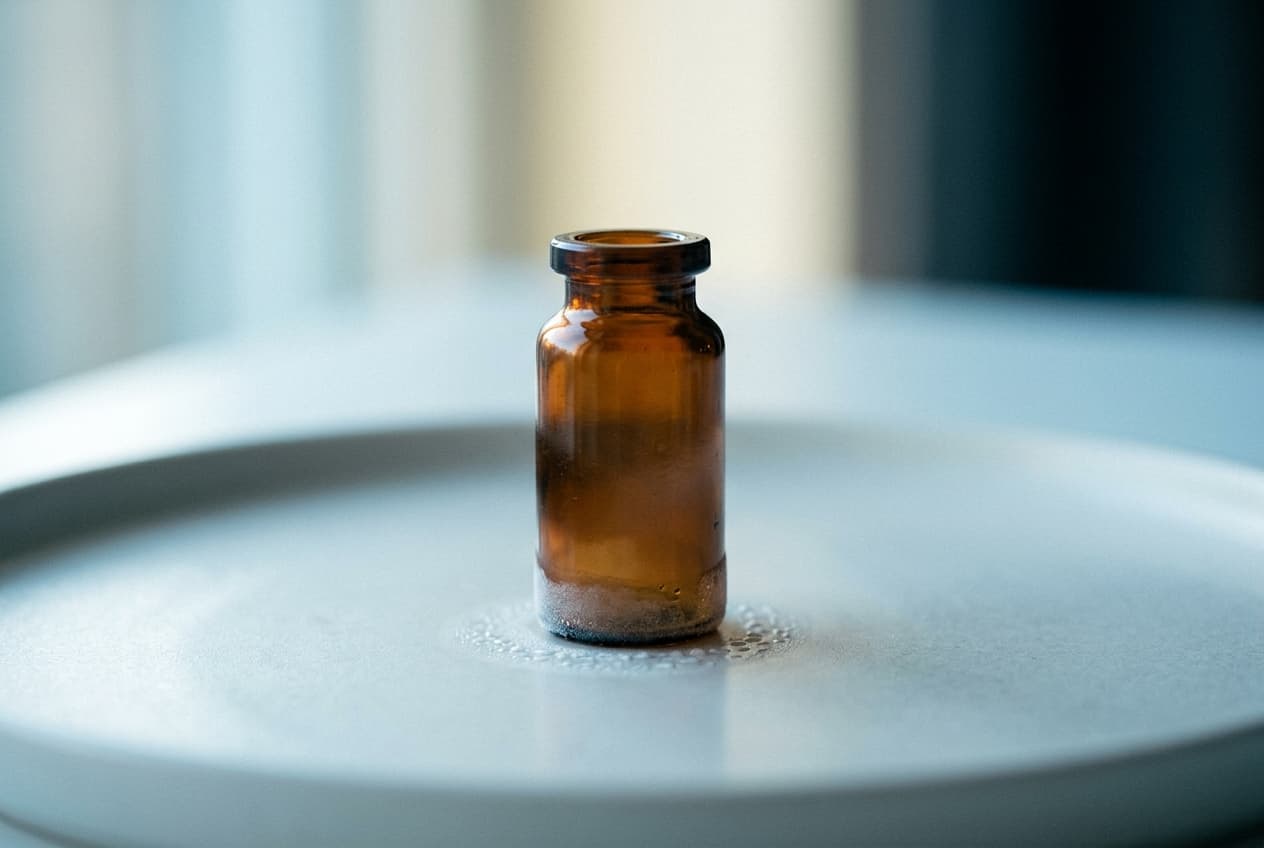
Refrigerate at 2 to 8 °C after reconstitution. Do not freeze. Light-protected. TB-500 (thymosin beta-4 fragment) is stable for 21 to 28 days at fridge temperature in BAC water. Because the dose is large (2 to 5 mg per injection) and the cycle is short (4 to 6 weeks loading), one vial typically lasts ~2 weeks at standard protocols. Well inside any stability window.
Cost & sourcing red flags
Typical price range: $40 to 90 per 5 mg vial from research-grade suppliers; 2 mg vials run $20 to 45. A loading protocol of 4 to 6 mg per week for 6 weeks costs $150 to 350 in raw material. Veterinary-labelled 'equine TB-500' from racehorse supply houses costs $40 to 110 per vial and is the parallel supply channel most TB-500 in the human grey market actually comes from.
Red flags
- 5 mg vials priced under $25. The synthesis route for the full thymosin beta-4 sequence is significantly more involved than for BPC-157, and bargain vials at this price point have a high historical rate of being the truncated 17 to 23 fragment (LKKTETQ peptide) rather than the full molecule.
- Labels claiming 'TB-500' but the COA lists 'thymosin beta-4 fragment' or 'TB4-17-23'. The 7-amino-acid fragment is cheaper to synthesise and is sold by some vendors as full TB-500. They are different molecules with different pharmacokinetics.
- Equine veterinary vials sold for human use without any change in label or COA. Equine product is manufactured under animal-pharma standards (lower endotoxin and sterility specs than human pharma), and the racehorse supply chain has documented adulteration incidents flagged by horse-racing doping authorities.
- Vendors who refuse to share batch-specific HPLC and mass spec data. The mass-spec peak for full TB-500 sits at ~4,963 Da; a vendor unwilling to show the peak is hiding a truncation or impurity.
- Reconstitution instructions that recommend large dilution volumes (5+ mL into a 5 mg vial). Under-concentration dilutes any third-party assay attempt and is a known tactic to mask underfilled vials.
- Vials shipped with visible moisture inside the lyophilised cake or with a yellowed tint. TB-500 should look white and dry; coloration suggests degradation.
Pricing rots fast and varies by region and supplier. We list no vendors.
Common mistakes
Skipping the loading phase to save vials.
Better approach: Tissue stores of the active peptide build up gradually. A maintenance dose without a loading phase often produces no detectable effect because you never reached the threshold. If cost is the constraint, run a shorter loading phase (3 weeks at 5 mg twice weekly) rather than a watered-down version.
Treating it like BPC-157 and injecting near the injury.
Better approach: TB-500's effect is systemic. The protein distributes throughout the body within hours. Injecting near an injury site adds no measurable local benefit and creates more injection-site irritation. Pick a comfortable abdominal site and rotate.
Re-loading every 4 weeks because 'more must be better.'
Better approach: Tissue persistence after a loading phase is longer than the serum half-life suggests. Most users do one loading phase, drop to maintenance or stop, and reassess at week 12. Re-loading sooner usually wastes vials and may push the long-term safety question past the point of comfort.
Pairing it with steroids for a 'super recovery' stack.
Better approach: Corticosteroids suppress the same repair pathways TB-500 amplifies. The two work in opposite directions. If a flare needs a steroid course, pause the peptide until the course is finished, then resume.
Real-world tips
- Plan for the loading-phase lethargy. The first week often feels like a low-grade fatigue day. Don't programme a fitness test or competition into that window.
- Track an objective recovery metric (time to fall asleep, HRV trend, soreness rating 24h post-session) across the loading phase. Pain scores drift; objective metrics tell you whether the peptide is doing work.
- If pairing with BPC-157, give the two different injection sites and different schedules. BPC-157 split AM/PM near the injury, TB-500 twice weekly subcut abdomen. Don't co-locate; the two protocols don't need each other to land in the same skin.
- Refrigerate the reconstituted vial vertically in the door, not on the bottom shelf where it can touch the back wall (slight freeze risk).
- The 'I think it's working but I'm not sure' state at week 4 is normal. Hold the protocol through week 6 before deciding. Most users who quit at week 3 didn't give it long enough; most who push past week 8 are wasting vials.
What users report
Aggregated from r/Peptides, r/PeptideHelpers, and bodybuilding/recovery forums. Not clinical data.
Onset: Users typically describe the first felt change at day 5 to 10 of a twice-weekly loading protocol, presenting as reduced morning joint stiffness or a less-grindy feel from a chronic tendon site; structural recovery from older injuries lands at week 3 to 4 and stabilises by week 6.
Common reports
- Reduced morning stiffness in chronic injury sites within the first 10 days; users with shoulder labrum, lateral epicondyle, and rotator cuff complaints report this most.
- Transient lethargy and 'heavy limbs' during the first 1 to 2 weeks of the loading phase, often described as flu-like without fever. Most users push through and the fatigue resolves by week 3.
- Mild flushing or warmth in the 30 minutes after subcutaneous injection, more common with the larger 5 mg loading doses.
- Increased bruise tolerance and faster fade of bruises during the loading phase, attributed by users to angiogenesis effects; this matches the documented mechanism.
- Hair on the body and head growing faster during long protocols. The mechanism (hair follicle stem cell migration) is plausible but the effect is not consistent across users.
- 'Nothing happened' reports cluster around two profiles: users with no clear underlying injury, and users running maintenance doses (2 mg/week) without ever doing the loading phase. The compound is dose- and substrate-dependent.
Where reports diverge from theory: The animal literature on thymosin beta-4 documents local cardiac and dermal wound healing at injection sites. Forum reports often describe systemic effects from subcutaneous injection at a distant site (e.g. abdomen) helping a knee or shoulder, framed as the peptide 'finding the injury'. Human pharmacokinetic data on subcutaneous TB-500 is sparse, and whether plasma levels after subcutaneous dosing reach concentrations that drive tissue effects far from the injection site is unresolved. The 'whole-body recovery' framing on forums runs ahead of the data.
When something else is the better tool
BPC-157
Use instead when: There's a specific, localisable injury you can inject near (chronic Achilles, golfer's elbow, surgical scar). BPC-157's site-specific effect is the strongest part of its evidence; TB-500 is the systemic alternative for diffuse situations.
GHK-Cu
Use instead when: Skin and connective-tissue cosmetic outcomes are the primary goal. GHK-Cu is slower and more cosmetic; TB-500 is faster and more functional.
Targeted rehab and load management
Use instead when: You haven't yet done the structured eccentric loading, the deload week, or the form work on whatever injury you're chasing. A peptide doesn't substitute for the boring part of rehab. Run the protocol; add TB-500 if you plateau.
Based on 1 peer-reviewed study
- How is TB-500 different from Thymosin Beta-4?
- TB-500 is the synthetic active fragment (17 amino acids) corresponding to the cell-binding region of full-length Thymosin Beta-4 (43 amino acids). The shorter peptide is easier to manufacture and is what's actually sold; biologically it appears to replicate the parent protein's repair effects in animal models.
- Why the lethargy in the first week?
- Best guess: the body redirects metabolic resources toward repair processes that the peptide amplifies. The effect is dose-dependent and time-limited. Almost everyone reports it fading by the end of the second week. If lethargy persists past week 2, lower the dose or pause.
- Can I use it on rest days only?
- TB-500's effect is independent of training timing because the half-life and tissue persistence extend over days. Most users dose on a fixed schedule (e.g. Monday and Thursday) regardless of training days.
- Is the racehorse-doping data relevant?
- Mostly as a signal of bioactivity. TB-500 is banned in racing because it works in horses for tendon and joint repair. The human translation is plausible but not equivalent. Horses get the peptide injected intramuscularly at higher doses and with much closer veterinary monitoring than the grey-market protocol provides.
- What about hair regrowth?
- Some users report hair quality improvements during long cycles, but this is anecdotal and probably secondary to general tissue-repair effects. For hair specifically, GHK-Cu (topical or injected) has more direct evidence.
Last updated:
Related peptides
Other compounds in this category
- BPC-157A 15-amino-acid stretch lifted from a protein in human gastric juice. Best-known use is soft-tissue repair, with a quieter second life as a gut-healing protocol.
- GLOW StackA pre-blended convenience vial containing TB-500, BPC-157 and GHK-Cu in one daily injection. Marketed as a recovery-plus-skin protocol.
- KLOW StackGLOW plus KPV. The same TB-500 + BPC-157 + GHK-Cu blend with an added anti-inflammatory tripeptide. Marketed at users with gut or chronic-inflammation overlap.