

Lipo-C (MIC)
Also known as: Lipo-C · MIC blend · Lipotropic Injection
A vitamin-and-amino-acid injection blend - methionine, inositol, choline, B12, sometimes more. It is not a peptide and it is not a fat-burner. It is an old-school clinic adjunct with decades of use and almost no RCT support.
Overview
Lipo-C, also called a MIC injection or lipotropic shot, has been a fixture of US weight-loss clinics since the 1960s. The formula varies by compounder, but the core is methionine (a methyl donor), inositol (lipid-signalling cofactor), choline (phosphatidylcholine precursor), and B12 (energy and methylation cofactor). These are nutrients your body uses in fat metabolism; injecting them bypasses the gut and gives you a clean serum spike. Whether that does anything meaningful for fat loss in someone already eating a normal diet is the question fifty years of clinic use has not answered with a single solid randomised trial. Users who feel better on it usually attribute the benefit to the B12, which is fair.[1]
Evidence quality
Six decades of clinic use and zero high-quality RCTs comparing MIC injections against placebo for weight loss. The individual components have evidence bases of their own - B12 for fatigue in deficiency, choline for hepatic fat metabolism in deficient states - but the blend as marketed for fat loss has not been studied as a unit. Treat it as a nutrition adjunct with a long safety track record, not as a fat-loss intervention.
Benefits & timeline
Benefits
- Reliable energy bump in the day or two after the shot - largely a B12 effect, more pronounced if the user was subclinically deficient
- Methyl-donor support for users with MTHFR variants or low choline intake (vegetarians and vegans, primarily)
- Cheap, widely compounded, and well tolerated - low barrier to trying it as an adjunct to a real weight-loss programme
- No systemic peptide-class risks; no growth-factor signalling to worry about
Timeline
Week 1
Energy and mood lift within 24-48 hours of the first shot. Most prominent in users with low B12 baseline.
Week 2-4
Subjective energy steadies into a new baseline. No measurable scale change from the injection itself.
Week 4-8
Body composition changes track the diet and training programme, not the injection.
Week 12
End of standard cycle. The injection can be continued indefinitely - these are vitamins - but the marginal value falls once baseline B12 and choline are normalised.
Dosage protocols

Advanced
2 mg
three times weekly
Beginner
1 mg
twice weekly
1 ml of blended formula per injection.
Standard
1 mg
three times weekly
Titration & adjustment
No titration needed. Start at full 1 ml IM 2 to 3× weekly. Adjust frequency, not dose, if you find the injection schedule inconvenient. Stop at any time.
Injection timing

IM injection 2 to 3× weekly, ideally on training days, 30 to 60 minutes pre-workout. Rotate sites (glute, deltoid). Avoid same-site repeat injection within a week.
Side effects & contraindications

- mildInjection-site irritation - the blend is intramuscular and can sting.
- mildVitamin-smelling urine for a few hours after the shot. Normal.
- mildSome users report a fishy body odor at higher methionine doses or with carnitine-augmented formulas.
- moderateVery rare allergic reactions to one of the compounded components - usually the preservative, not the active vitamins.
Contraindications
- Known allergy to any component (B12, methionine, inositol, choline, or the preservative in the compound)
- Pregnancy and breastfeeding - dose is unlikely to be harmful but compounded blends are not standardised, so the safe answer is no
- Severe kidney disease - methionine load is not trivial in someone with poor clearance
- Trimethylaminuria (fish-odor syndrome) - the choline and methionine load will make symptoms worse
Reconstitution & injection
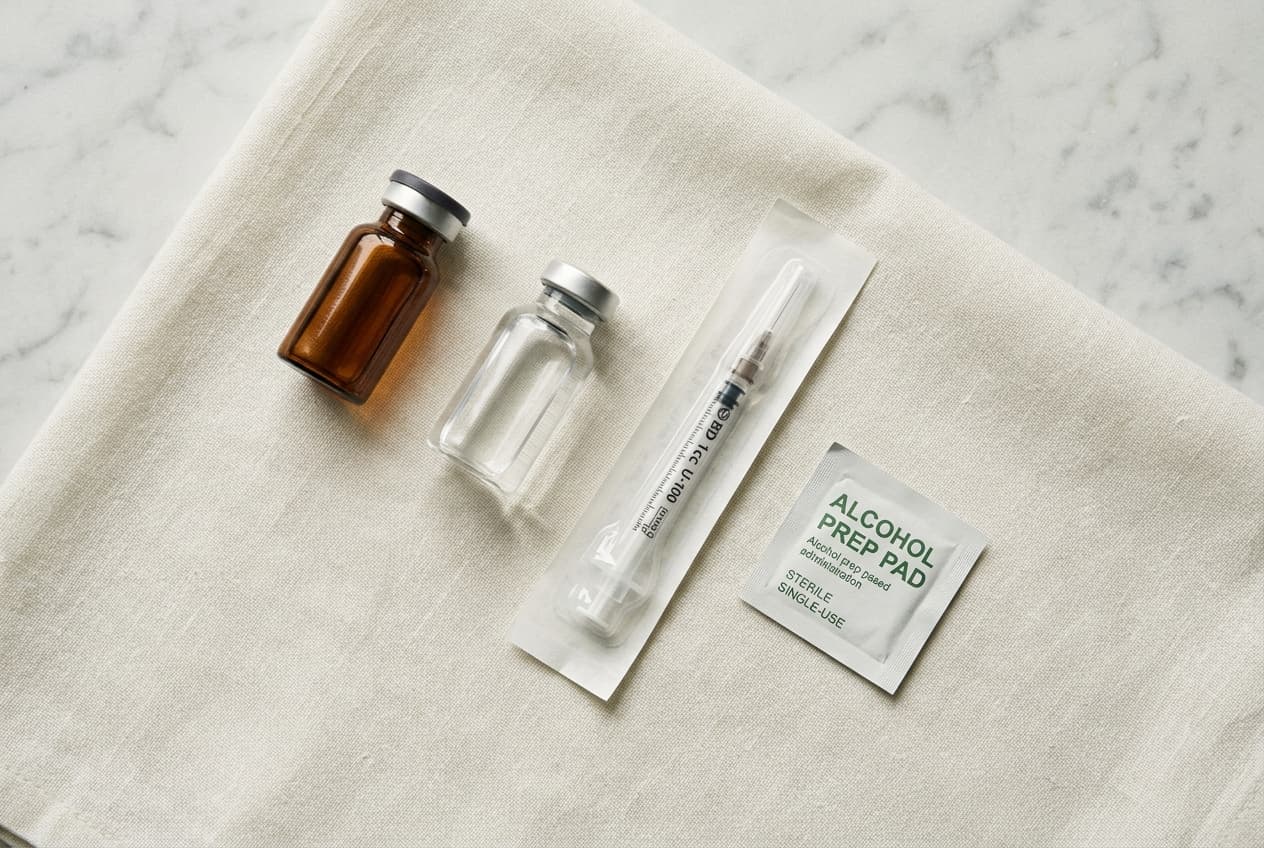
Comes pre-mixed in a 10 ml or 30 ml multi-dose vial from the compounding pharmacy. Standard dose is 1 ml intramuscular into glute or deltoid, 2-3 times weekly. No reconstitution math because there is no powder. Rotate sites - the blend can leave a small bump or tender spot at the same injection point if you do not move it around.
Open calculator pre-filledStorage after reconstitution
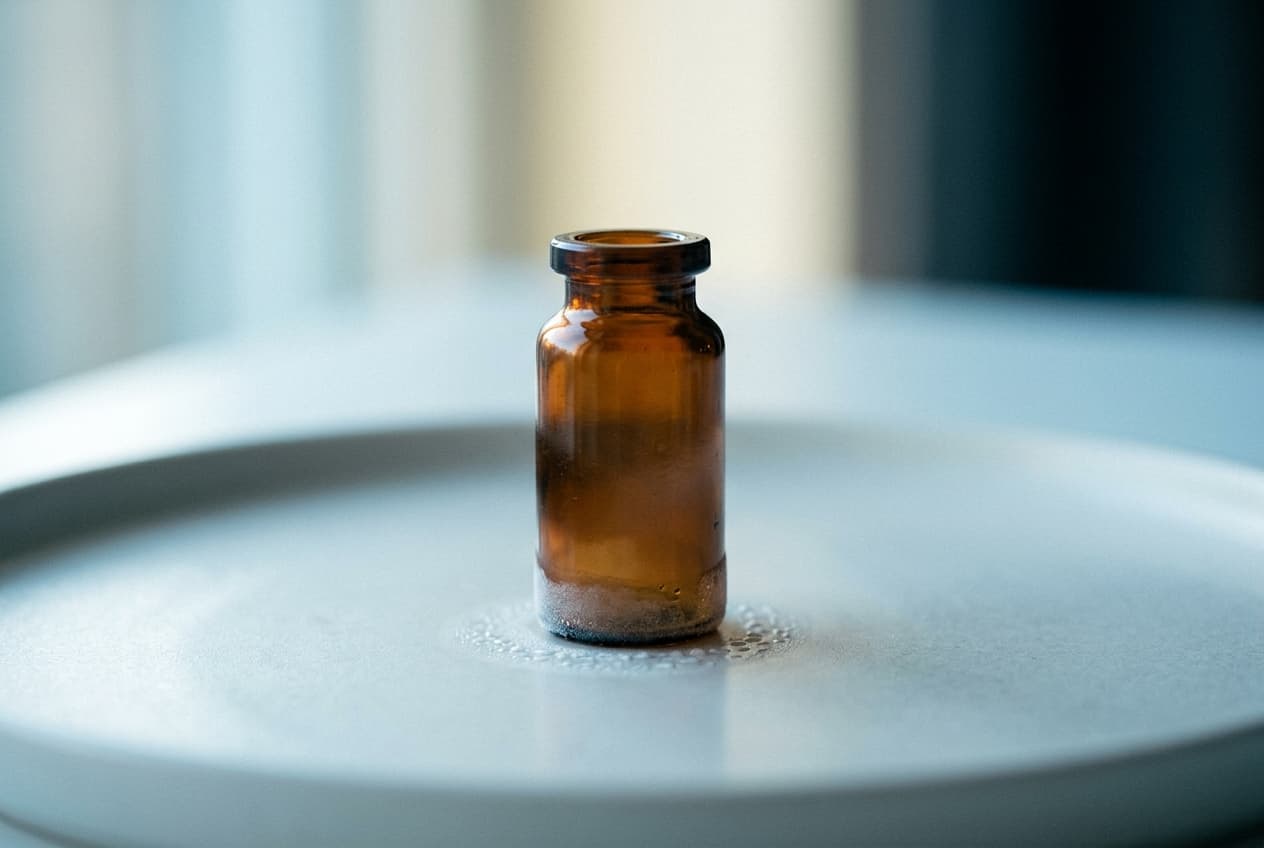
Pre-mixed multi-dose vial from the compounding pharmacy. No reconstitution math. Refrigerate at 2 to 8 °C once opened, light-protected (B12 is photosensitive. The bright pink colour fades when exposed to light). Use within 28 days of first puncture, or by the pharmacy expiry date, whichever is earlier. Do not freeze. Inspect: the solution should retain its bright pink/red colour. A pale or amber tint signals B12 photo-degradation. Still safe to inject but reduced potency.
Cost & sourcing red flags
Typical price range: $20 to 60 per single IM/SC shot at US weight-loss clinics and med spas; telehealth subscriptions run $80 to 200/month for 4 to 8 doses. Compounded multi-dose vials from 503A pharmacies typically land at $40 to 90 per 10 mL vial.
Red flags
- Clinics charging $75+ per shot with no breakdown of which actives (methionine, inositol, choline, B12, L-carnitine, lidocaine) are at what concentration. The formula varies pharmacy to pharmacy and a vague 'lipotropic blend' label hides the dose.
- Online 'Lipo-C' kits shipped from outside a 503A or 503B pharmacy without a prescription. Sterile compounded injectables sold without RX in the US are operating outside the FDCA. Sterility, endotoxin, and potency are all unverified.
- Vials lacking a beyond-use date (BUD) or a pharmacy lot number on the label. Compounded sterile preparations from a compliant 503A must carry both; missing labels usually mean the product was repackaged or relabelled downstream.
- Marketing copy promising specific fat-loss numbers (e.g. '5 lbs per month') from the injections alone. The active ingredients are nutritional cofactors; no controlled trial shows lipotropic injections produce weight loss above placebo without diet and exercise.
- 'Lipo-C plus semaglutide' or 'Lipo-C plus tirzepatide' co-formulated in a single vial. Co-formulating a GLP-1 with B-vitamin lipotropics is not a stability-validated combination, and any felt weight loss is the GLP-1 doing the work. The Lipo-C component is essentially being sold at GLP-1 margin.
Pricing rots fast and varies by region and supplier. We list no vendors.
Common mistakes
Calling it a peptide.
Better approach: It is not. It is a B-vitamin and amino-acid blend. The honest framing matters because it sets the right expectation. You are not buying a growth-factor signal or a receptor agonist; you are buying a nutrient infusion.
Expecting the shot to drive weight loss without a deficit.
Better approach: The injection does not change calorie balance. It can support energy and methylation, which makes it easier to stick to a deficit, but you have to bring the deficit. If your diet is not in order, no shot will compensate.
Hopping between compounders for the cheapest source.
Better approach: Formulas vary. One compounder's Lipo-C is 10 mg methionine per ml, another's is 25. Pick a compounder, learn how you respond to their formula, and stay with them. Switching mid-cycle introduces a variable you cannot control.
Daily injections.
Better approach: 2-3 times weekly is the historical convention and it is enough. Daily dosing builds up injection-site irritation without improving outcome. Methionine and choline have long enough half-lives that twice weekly is sufficient.
Real-world tips
- Get a serum B12 and folate before starting. If you are deficient, the shot will feel transformative. If you are replete, it will feel like nothing.
- Rotate injection sites - upper outer glute, deltoid, vastus lateralis. Same-site injections leave a tender bump that can last a week.
- Use a 1 inch 25-gauge needle for IM injection in the glute. The 5/8 inch needles some compounders ship with do not reach muscle in larger users.
- If the blend includes carnitine and you notice fishy body odor, drop frequency to twice weekly and see if it resolves.
- Track energy on a 1-10 scale weekly. If you cannot show yourself a real lift after a month, the injection is not adding to your programme.
What users report
Aggregated from r/loseit, r/PlasticSurgery, weight-loss clinic review threads, and TikTok before/after content. Not clinical data.
Onset: Most users describe a short-lived energy bump within a few hours of the shot (this is the B12 and B-complex, not the lipotropics); body-composition reports are at the 6 to 12 week mark and are confounded by concurrent diet and exercise programs.
Common reports
- Energy and mood bump for 24 to 48 hours post-injection, more pronounced in users who were B12-deficient at baseline.
- Sting at the injection site for 5 to 10 minutes, especially when the formula is not buffered or when lidocaine is omitted from the compound.
- Bright yellow urine for 12 to 24 hours after the shot. The B2/riboflavin metabolite is harmless but startles first-timers.
- No appetite suppression and no felt fat-burning sensation; users expecting a 'GLP-1 lite' effect uniformly report disappointment.
- Mild bruising and post-injection soreness at the deltoid or gluteal IM site, especially when the same injector reuses sites across sessions.
Where reports diverge from theory: The marketing frames Lipo-C as a fat-burning shot. The actual mechanism is nutrient supplementation. Methionine, inositol, choline, and B12 support hepatic lipid handling but do not drive fat loss in nutritionally replete adults. Forum reports that show meaningful weight loss are almost always running a concurrent caloric deficit or a prescription GLP-1; the isolated Lipo-C contribution to the scale is small to nil. The felt 'energy' effect is real for B12-deficient subjects and minimal for everyone else.
When something else is the better tool
Oral B12 plus dietary choline
Use instead when: You are replete and want the methyl-donor support without the cost or hassle of injections. Sublingual B12 at 1000 mcg and 3 eggs a day for choline covers most of what the shot delivers, for the cost of the eggs.
Semaglutide or Tirzepatide
Use instead when: Your actual goal is weight loss. Lipo-C is an adjunct at best; the GLP-1 incretins are the tool. If a clinic is selling MIC as a weight-loss treatment without mentioning the incretin options, you are getting a worse intervention than the standard of care.
Doing nothing extra and fixing the diet
Use instead when: You have not yet tightened the food log. The injection cannot compensate for an unmeasured deficit and rough sleep. Build the foundation, then add the adjunct - not the other way around.
Based on 1 peer-reviewed study
- Is this really a peptide?
- No. A compounded vitamin-and-amino-acid injection. It gets shelved with peptides because clinics that prescribe peptides usually also offer it.
- Will it actually help me lose weight?
- Not directly. It can support energy and methylation, which can support adherence to a diet, which is where the weight loss actually comes from. The shot is one step removed from the outcome.
- Why am I peeing bright yellow?
- The B-complex. Normal, expected, harmless.
- Can I run it forever?
- No acute reason not to, but marginal benefit drops once your serum B12 and choline are normalised. After 8 to 12 weeks, drop to once weekly or stop entirely.
- Lipo-C versus Fat Blaster. Which is better?
- Close cousins. Fat Blaster adds L-carnitine, which can help training-day energy. If you do most of your work fasted and lift heavy, Fat Blaster has the edge. For general energy and methylation support, Lipo-C is cleaner.
Last updated:
Related peptides
Other compounds in this category
- SemaglutideThe GLP-1 receptor agonist that turned obesity pharmacology into a mainstream conversation. Once-weekly injection, ~7-day half-life, and the largest randomised dataset of anything in this catalogue.
- TirzepatideDual GIP and GLP-1 agonist. Beats Semaglutide head-to-head on weight loss and glycaemic control, and is becoming the default first-line choice when both are available.
- RetatrutideTriple agonist hitting GIP, GLP-1, and glucagon receptors at once. Phase 2 data shows the largest weight-loss numbers ever reported for a drug in trials. ~24% at 48 weeks.
- MazdutideChinese-developed GLP-1 / glucagon co-agonist (IBI362, licensed from Eli Lilly's LY3305677). Solid Phase 2 data, approved in China for diabetes in 2024, investigational elsewhere.
- CagriSemaOnce-weekly fixed-dose combination of Cagrilintide and Semaglutide. The leading 'next-generation' obesity treatment in Phase 3, delivering roughly 20% weight loss in late trials.