

SNAP-8
Also known as: Acetyl Glutamyl Octapeptide-3
A topical octapeptide marketed as a 'Botox alternative'. The mechanism is real; the magnitude is nothing like an injection.
Overview
SNAP-8, acetyl glutamyl octapeptide-3, is an eight-amino-acid topical peptide designed by Lipotec for cosmetic anti-aging serums. The mechanism is biologically plausible: it interferes with the SNARE complex, the same protein machinery botulinum toxin targets, which reduces neurotransmitter release at the neuromuscular junction. The cosmetic-industry data suggests a small, gradual softening of expression lines over weeks of daily topical use, nothing like the effect of an injected neurotoxin. Most studies are industry-sponsored, small, and short. If you're picking between SNAP-8 and an actual neuromodulator injection, you're not picking between equivalents.[1]
Evidence quality
Cosmetic-industry trials, mostly from Lipotec, the original formulator. The 2013 reference study showed roughly 35% reduction in wrinkle depth at 8 weeks at 5% concentration. Sample sizes are small, blinding is inconsistent, and replication outside the industry is sparse. The mechanism is plausible; the magnitude is modest.
Benefits & timeline
Benefits
- Mild, gradual softening of fine expression lines (forehead, crow's feet) with consistent twice-daily use
- No injection. Useful for people who want the mechanism in spirit but can't or won't use injectables
- Generally well-tolerated, even on sensitive skin
- Stackable with hyaluronic acid, niacinamide, and most retinoid routines
Timeline
Week 2
Subtle change in skin texture; lines unchanged but skin looks slightly more relaxed.
Week 4 to 6
Visible softening of dynamic lines for many users. Not all users respond.
Week 12
Plateau of effect. Beyond here, continued use maintains; it doesn't deepen.
After stopping
Effect fades within 2 to 4 weeks; nothing about it is permanent.
Dosage protocols
Advanced
200 mcg
twice daily topical
Beginner
50 mcg
twice daily topical
Standard
100 mcg
twice daily topical
Titration & adjustment
No injection titration. Apply topical serum at 5% twice daily on clean skin. Effect is cumulative; do not increase concentration above 10% as it can irritate without adding benefit.
Injection timing

Twice daily on clean skin, morning and evening. Apply before retinol (allow 10 minutes between actives).
Side effects & contraindications

- mildMild redness or irritation in sensitive skin, usually from the carrier serum rather than the peptide itself.
- mildOccasional layering irritation when stacked aggressively with retinoids.
- mildNo systemic effects at typical topical concentrations.
Contraindications
- Broken or actively inflamed skin. Wait for the barrier to heal
- Known peptide allergy
- Pregnancy and breastfeeding by precaution. No relevant safety data either way
Reconstitution & injection
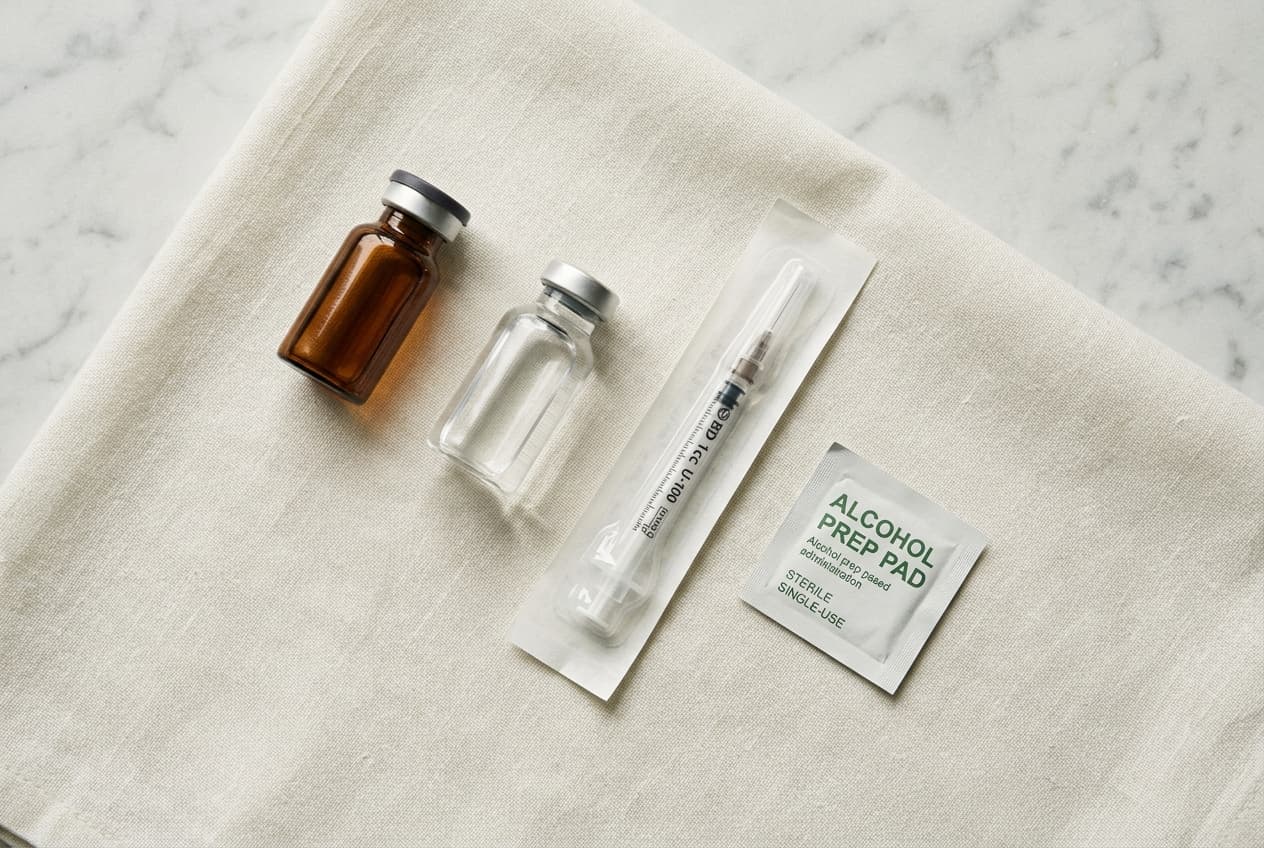
Not injected. SNAP-8 is supplied as a powder or pre-formulated serum at 5 to 10% concentration. To formulate, dissolve into a clean serum base (a hyaluronic acid + glycerin water-phase serum works well) at 5%. Apply twice daily on cleansed skin, before heavier creams or oils. Higher concentrations than 10% don't increase efficacy and start to irritate.
Open calculator pre-filledStorage after reconstitution
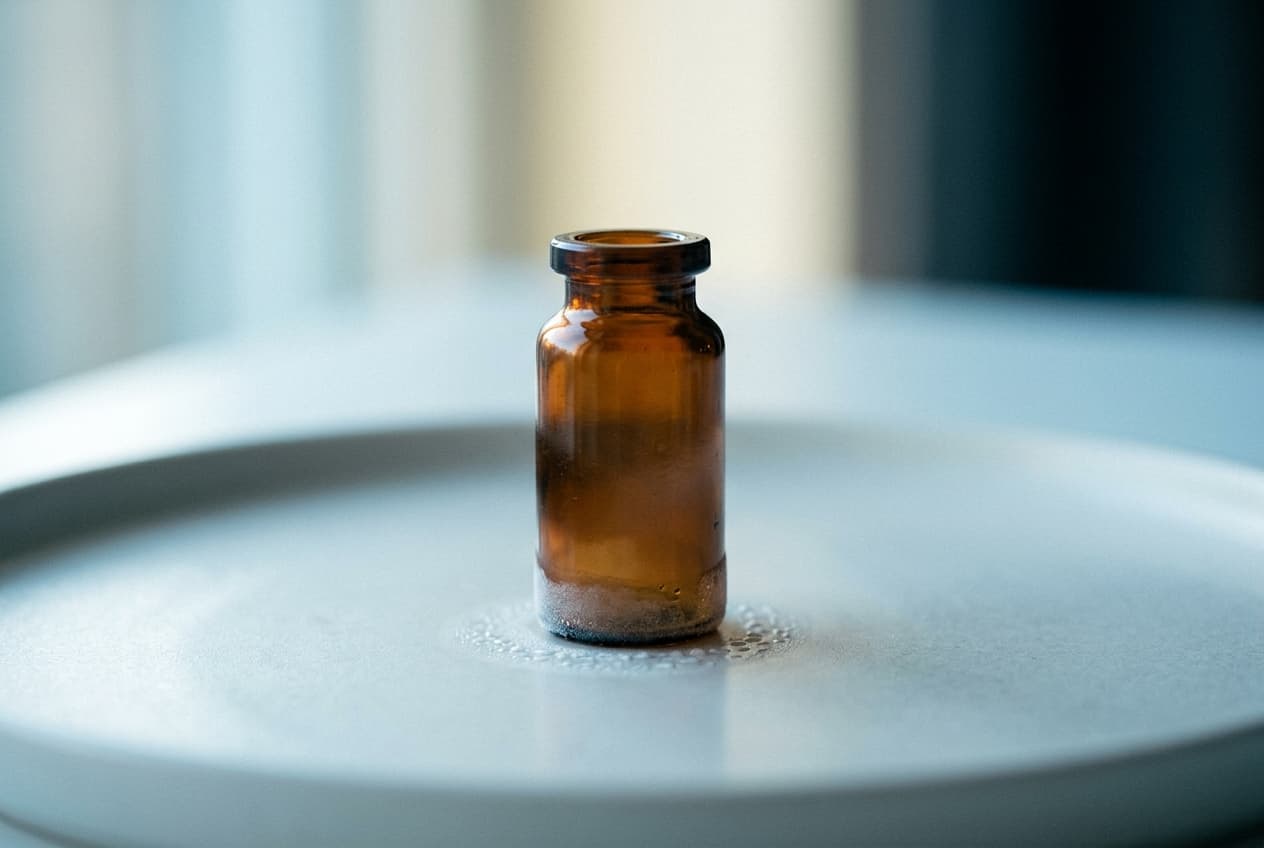
Topical product (cream or serum from a compounding cosmetic source). Follow the product label. Most SNAP-8 formulations are stable at room temperature (15 to 25 °C) for the printed shelf life, with refrigeration only required after opening if specified. Light-protected. Keep in the original opaque packaging. There is no reconstitution step here unless you are working with raw lyophilised powder, in which case treat as a standard peptide (refrigerate, 28 days @ 2 to 8 °C).
Cost & sourcing red flags
Typical price range: Finished topical serums with 3 to 10% SNAP-8: $25 to 80 per 30 mL bottle from indie skincare brands. Raw SNAP-8 powder for DIY formulators: $40 to 120 per 1 g from cosmetic ingredient suppliers. Branded formulations (Lubrizol's Argireline-NP / SNAP-8 complex) priced higher with a clinical-claim premium.
Red flags
- Serums claiming 10% SNAP-8 at the same price point as 3% formulations. The peptide is the most expensive ingredient in the bottle, and a 10% formulation costs roughly 3x as much to produce as a 3% one; same-price 10% claims usually mean underdosed product.
- No mention of formulation pH. SNAP-8 needs a near-neutral pH (5.5 to 7) to remain stable; serums combined with low-pH actives (vitamin C, AHAs) in the same product likely deliver degraded peptide.
- Clear or low-viscosity formulations sold as 'high penetration'. Topical peptide penetration through intact stratum corneum is poor regardless of vehicle, and 'penetration' marketing without a delivery system (liposomes, encapsulation) is cosmetic-grade hand-waving.
- Manufacturer-cited '34.98% wrinkle reduction in 28 days' as a study citation. That figure traces back to a single Lubrizol-funded in-vivo study with 17 subjects; independent replications show 10 to 20% reductions at best.
- DIY raw powder sold without solubility guidance. SNAP-8 is hydrophilic and does not dissolve into oil-based serums; powder-into-oil formulations leave the peptide as inactive sediment.
Pricing rots fast and varies by region and supplier. We list no vendors.
Common mistakes
Calling it a Botox alternative.
Better approach: It isn't. Botulinum toxin paralyses the muscle for months; SNAP-8 softens the surface effect by perhaps 10 to 30% in responders. They're not in the same league. Use SNAP-8 as a daily maintenance layer, not as a substitute for injection if injection is what you actually want.
Layering it directly under tretinoin.
Better approach: Both touch the same skin barrier and the combined irritation can be more than either alone. Use SNAP-8 in the morning under SPF, save tretinoin for the evening. Many people get good outcomes from that split.
Buying a 'peptide serum' without knowing the concentration.
Better approach: Most marketed peptide serums underdose. SNAP-8 below 2.5% is unlikely to do much. Buy a product that publishes its concentration or buy the raw and formulate.
Expecting it to work on static wrinkles.
Better approach: SNAP-8 targets dynamic (expression-driven) lines via the SNARE pathway. Static wrinkles (sun damage, collagen loss) need a different tool. Retinoids, microneedling, dermal fillers.
Real-world tips
- Apply in two layers (once after cleansing, once after toner) for better absorption than a single thicker layer.
- Photograph monthly under the same light. The change is gradual enough that you'll miss it in the mirror.
- Pair with sunscreen during the day. UV-driven skin damage is the bigger driver of expression lines you can't soften from the surface.
- Don't skip the eye area. Crow's feet are where most users report the most visible response.
- Refrigerate the serum if you formulate at home. Peptides degrade in warm bathrooms.
What users report
Aggregated from r/SkincareAddiction, r/AsianBeauty, and indie skincare community threads. Not clinical data.
Onset: Twice-daily topical application: subtle softening of expression lines first reported at 3 to 4 weeks, with most users judging the verdict at 8 to 12 weeks.
Common reports
- Mild smoothing of forehead and crow's-feet lines after 6 to 8 weeks of consistent twice-daily use, described as a 'pixel-level' change visible in side-by-side photos but easy to miss in the mirror.
- Almost no acute sensation on application, in contrast to retinoids or vitamin C; this is also the source of the most common complaint, 'I can't tell if it's working'.
- Effect is reversible within 3 to 4 weeks of stopping, which suggests the mechanism is more functional than structural.
- Better-tolerated under makeup than peptide serums with copper complexes, and users routinely layer it under SPF without pilling.
- Diminishing returns above 5 to 8% concentration in user comparisons, which lines up with the Lubrizol in-vitro saturation data.
Where reports diverge from theory: Marketing positions SNAP-8 as 'topical Botox', but the mechanism (SNAP-25 mimic that interferes with neurotransmitter release at the neuromuscular junction) requires the peptide to cross the stratum corneum, the epidermis, and into the dermal-muscular junction. Independent permeation studies suggest very little of the topical dose ever gets there. The visible smoothing real users report is probably a humectant-and-film-former effect from the serum vehicle more than a true SNARE-complex inhibition. Treat the wrinkle reduction as cosmetic, not pharmacological.
When something else is the better tool
Botulinum toxin injection
Use instead when: You want a clear, visible reduction in dynamic wrinkles. The injectable is dramatically more effective and is the right tool when the goal is the effect, not the gentleness.
Retinoids (tretinoin, retinol)
Use instead when: The primary concern is skin texture, collagen loss, and overall photoaging. Retinoids have far more evidence and a deeper effect; pair with SNAP-8 if you want both.
Argireline (acetyl hexapeptide-8)
Use instead when: You want a similar mechanism in a slightly different molecule. The evidence base is similar. Both are mild, both work modestly, neither replaces injection.
Based on 1 peer-reviewed study
- Is it really a topical Botox?
- It targets the same SNARE machinery in principle. The magnitude of effect is much smaller because the peptide barely penetrates to the neuromuscular junction. Calling it a 'topical Botox' is marketing; calling it a mild expression-line softener is honest.
- How long until I see something?
- Four to six weeks of consistent twice-daily use. If you've gone 12 weeks without any change, you're probably a non-responder or the formulation is underdosed.
- Can I use it with retinoids?
- Yes, separated in time. SNAP-8 morning, retinoid evening, with a barrier-supportive moisturiser layered in. The split keeps the irritation manageable.
Last updated:
Related peptides
Other compounds in this category
- GHK-CuThe copper-binding tripeptide your skin loses with age. Strongest evidence is topical for skin and wound healing; injectable use is mostly anecdotal.
- Melanotan-2The unregulated tanning peptide. Cheaper and more effective on libido than MT-1, but the side effect profile and mole-change risk make this the riskier of the two.
- Melanotan-1An α-MSH analogue approved in the EU and US as Scenesse (afamelanotide) for erythropoietic protoporphyria. The off-label tanning use is what most people actually want it for.