

5-Amino-1MQ
Also known as: 5-amino-1-methylquinolinium · NNMT inhibitor
An orally bioavailable small-molecule inhibitor of NNMT (nicotinamide N-methyltransferase). Plenty of compelling rodent data, almost no human data, and a forum community that has gotten ahead of the science.
Overview
NNMT is an enzyme at the intersection of NAD+ metabolism and adipose biology. In obese fat tissue it is overexpressed; knocking it down in mice produces lean phenotypes with better mitochondrial function and preserved muscle mass during caloric restriction. 5-Amino-1MQ is the small molecule academic groups (Kraus, Pissios, and collaborators) used to validate that target pharmacologically. The data in mice is interesting. The data in humans is essentially anecdotal forum reports and a small number of practitioner case series. It is not a peptide, it is a quinolinium derivative, but it gets shelved here because the community using it overlaps with the peptide crowd.[1]
Evidence quality
The mechanistic case rests on a series of papers from Pissios, Kraus, and collaborators showing NNMT inhibition produces favourable metabolic phenotypes in diet-induced obese mice. There are no completed human RCTs of 5-Amino-1MQ in the public literature as of this writing. What circulates is forum reports, practitioner anecdotes, and one or two small case series. Treat the mouse data as a strong reason the molecule is worth studying in humans, not as a substitute for the trials that have not been done.
Benefits & timeline
Benefits
- Theoretical NAD+ preservation by removing the NNMT methyl-acceptor drain on intracellular NAD+ pools
- Animal data shows preserved lean mass during caloric restriction, which is the most interesting part of the mechanism
- Oral capsule dosing - the obvious upside for users who do not want to inject
- Subjectively reported energy improvement in a subset of users, usually within the first 2 weeks
Timeline
Week 1
Most users feel nothing. A subset reports a mild energy lift that could easily be placebo.
Week 2-3
If a real effect is going to show up, this is when energy and training capacity tend to nudge upward.
Week 6
Body composition changes, if any, are slow and small. Do not expect a scale move.
Week 12
End of cycle. Honest reassessment - did anything actually change, or did you spend three months hoping?
Off-cycle
4 weeks off. NNMT expression should normalise quickly given the half-life.
Dosage protocols

Advanced
150 mg
daily AM
Beginner
50 mg
daily AM
Standard
100 mg
daily AM
Titration & adjustment
Start at 50 mg once daily for 2 weeks. If well tolerated and you want a stronger effect, increase to 100 mg once daily or split 50 mg AM + 50 mg PM. Maximum reported tolerated dose is 150 mg/day. No taper required.
Injection timing

Oral capsule taken with breakfast. If splitting AM + PM, take the PM dose with lunch. Avoid late doses since some users report mild stimulant-like effect that can affect sleep.
Side effects & contraindications

- mildMild headache during the first week, especially if you skip breakfast on the morning dose.
- mildSome users report GI discomfort on an empty stomach. Take with food.
- mildA small subset notice sleep disturbance if dosing late in the day. Keep doses before mid-afternoon.
- moderateNo long-term human safety data. The animal work is short-duration. NNMT has roles in liver and brain methylation that have not been characterised under chronic inhibition in humans.
Contraindications
- Pregnancy or breastfeeding - no data
- Active malignancy - NNMT inhibition has been studied in cancer contexts with conflicting signals; not a tool to deploy outside that supervision
- Severe liver disease - methylation pathways the enzyme participates in matter more in a stressed liver
- Concurrent use of high-dose nicotinamide riboside or NMN without monitoring - the pathways interact and the combined effect on NAD+ has not been mapped
Reconstitution & injection
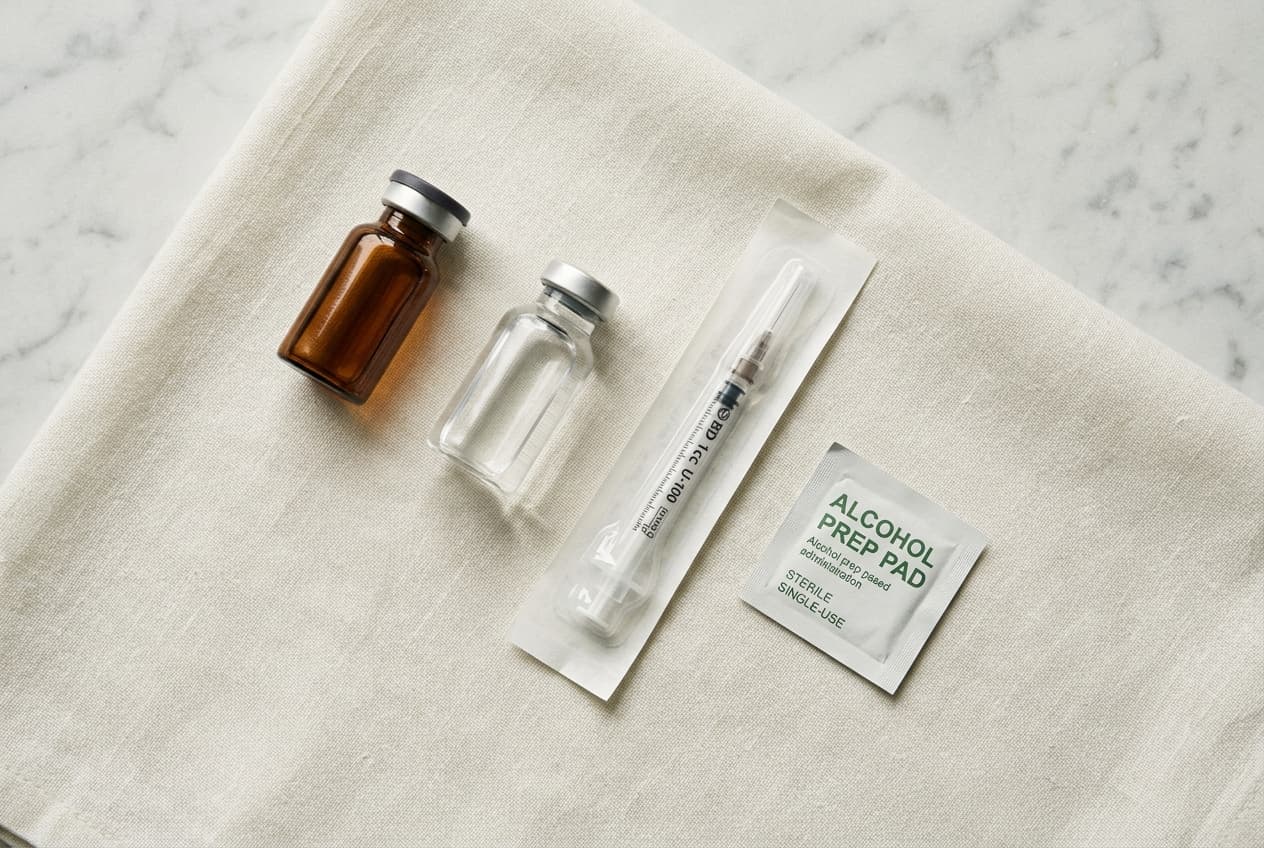
Oral capsules, typically 50 mg or 100 mg. Take with breakfast, or split as 50 mg AM + 50 mg with lunch. Avoid dosing after about 3 PM - the mild stimulant-like sensation some users report can interfere with sleep onset. No reconstitution math; this is one of the few non-injection options in the category.
Open calculator pre-filledStorage after reconstitution
Oral capsules. No reconstitution involved. Store the sealed bottle at room temperature (15 to 25 °C), away from humidity (the bathroom cabinet is the worst place). Keep the desiccant pack in the bottle. Once opened, capsules are stable for the labelled expiry date. Typically 18 to 24 months. There is no fridge requirement; refrigerating capsules can actually introduce condensation when you open the bottle in a warm room.
Cost & sourcing red flags
Typical price range: $60 to 120 per 60 to 90 count bottle of 50 mg oral capsules from research-grade suppliers. A 50 to 150 mg/day protocol over 8 to 12 weeks costs roughly $120 to 300 in raw material.
Red flags
- Capsules priced under $30 for a 60-count 50 mg bottle. At that price point the cost of the active pharmaceutical ingredient exceeds the retail price, which means the bottle almost certainly contains underdosed or substituted powder.
- No third-party HPLC certificate of analysis tied to the specific bottle lot. 5-amino-1MQ is a small molecule, not a peptide; ask for an HPLC purity trace, not a generic peptide-style COA.
- Vendors selling 'sublingual' or 'troche' formats at injectable-grade markup. Oral bioavailability is already ~38%, so the upcharge for sublingual delivery is not justified by the absorption gain.
- Stack products that combine 5-amino-1MQ with stimulants (yohimbine, synephrine, caffeine anhydrous) and market the combined product as the active ingredient. The stimulants do the felt-effect work and let vendors get away with subtherapeutic 5-amino-1MQ doses.
- Listings that conflate 5-amino-1MQ with MK-677 or with NAD+ precursors. They have different mechanisms; vendor copy that lumps them together is a tell that the vendor is paraphrasing marketing material rather than understanding the molecule.
Pricing rots fast and varies by region and supplier. We list no vendors.
Common mistakes
Treating it as a fat-loss drug.
Better approach: It is a mitochondrial and methylation tool with possible body-composition flow-through. Frame it as muscle preservation during a deficit, not as a replacement for the deficit. If your goal is straight fat loss, a GLP-1 will do more for you in less time.
Stacking it with high-dose NAD+ precursors without thinking through the pathway.
Better approach: NNMT and the salvage pathway intersect. Adding NR or NMN on top of an NNMT inhibitor changes the NAD+/methyl ratio in ways the human data has not characterised. Pick one intervention, give it 12 weeks, then add.
Dosing late in the day because you missed the morning window.
Better approach: Skip the missed dose. The half-life is long enough that the next morning's dose covers you, and late-day dosing is the single most common cause of the sleep disturbance complaint.
Expecting a felt effect in week one.
Better approach: Mechanism takes time. If you are someone who needs a fast subjective signal, this molecule will frustrate you and you will quit at day ten. Set the expectation honestly upfront.
Real-world tips
- Take with breakfast - empty-stomach dosing is the most common avoidable cause of mild GI complaints.
- Pair the cycle with resistance training, not with cardio alone. The animal data is most compelling on the muscle-preservation side, so design the protocol around that.
- Track a lean-mass marker (DEXA if accessible, otherwise repeated tape measurements at fixed landmarks) at the start and end of the cycle. Subjective energy reports drift.
- Do not combine with kratom, nicotinamide-heavy supplements, or untracked methyl-donor stacks during the cycle. You will not be able to attribute anything.
- Cycle off honestly at week 12. NNMT chronic inhibition has not been characterised in humans; 4 weeks off is the conservative pattern.
- If you feel nothing across a full 12-week cycle, move on. There are users who clearly respond and users who clearly do not, and stacking on top of a non-response is unlikely to fix that.
What users report
Aggregated from r/Peptides, biohacker forums, and clinic testimonials. No human clinical trials exist for this compound; all dosing is community-derived.
Onset: Users typically describe a subtle uptick in workout endurance and reduced post-meal sluggishness within 7 to 14 days at 100 to 150 mg/day; body composition changes take 6 to 8 weeks to read on the scale.
Common reports
- Improved gym output. Set-to-set recovery feels shorter and conditioning work feels less punishing, with the effect most consistent in users who lift in a calorie deficit.
- Mild appetite reduction in a subset of users, smaller in magnitude than what GLP-1 agonists produce. Many users report no change in appetite at all.
- Occasional GI upset (nausea, loose stools) in the first week at doses above 100 mg/day, usually resolving when the dose is split into two daily administrations.
- Mild headaches during the first 3 to 5 days at higher doses; uncommon at 50 mg/day.
- No felt acute hit. Users who expect a stimulant-like buzz from the 'NNMT inhibitor metabolic booster' framing are routinely disappointed. The signal, if present, is week-over-week.
Where reports diverge from theory: Vendor marketing leans heavily on the 2018 rodent paper showing reduced adipose mass and increased NAD+ in obese mice. The mouse dose translated to humans by allometric scaling is far higher than the 50 to 150 mg range most users run, so it is unclear whether common forum dosing is biologically active at the NNMT target. Forum reports describing dramatic recomposition (5+ kg fat loss in 8 weeks at 100 mg/day) almost always coincide with a concurrent caloric deficit or new training program; the isolated drug signal is much smaller.
When something else is the better tool
MOTS-c
Use instead when: You want a mitochondrial-biogenesis tool with a peptide format and a slightly stronger anecdotal track record in the longevity community. Different mechanism, similar evidence depth (modest).
Resistance training plus protein-forward diet
Use instead when: You are using 5-Amino-1MQ for muscle preservation in a deficit. The boring intervention does most of the work; the molecule is at best a small extra lever. Run the training and nutrition properly before adding pharmacology.
GLP-1 incretin plus heavy protein and lifting
Use instead when: The actual goal is fat loss with muscle preservation. Semaglutide or Tirzepatide plus a high-protein deficit and serious resistance work outperforms anything 5-Amino-1MQ can plausibly contribute to. The latter is a curiosity bet, not a primary tool.
Based on 1 peer-reviewed study
- Is this a peptide?
- No. A small quinolinium-based molecule. The peptide community uses it because the underlying community is really about fringe metabolic interventions.
- Will it raise my NAD+ measurably?
- In mice, yes. In humans, the data to confirm a measurable serum or muscle NAD+ rise at common doses is not published. If this matters to you, draw a baseline NAD+ before starting and again at week 12.
- How is it different from NMN or NR?
- NMN and NR feed the salvage pathway from upstream. 5-Amino-1MQ blocks the methyl-acceptor drain (NNMT) on the back end. Stacking them without a plan muddies the result.
- Any drug interactions to worry about?
- The human interaction profile has not been mapped. The molecule touches methylation, so caution with high-dose B-vitamins, SAMe, TMG, and anything else that loads or drains the methyl pool until you understand how you respond.
- Can I run it long-term?
- No human data supporting indefinite use. 12 weeks on, 4 off, is the cautious pattern. For fat-loss adjunct, longer cycles do not earn more result; they earn less safety margin.
Last updated:
Related peptides
Other compounds in this category
- SemaglutideThe GLP-1 receptor agonist that turned obesity pharmacology into a mainstream conversation. Once-weekly injection, ~7-day half-life, and the largest randomised dataset of anything in this catalogue.
- TirzepatideDual GIP and GLP-1 agonist. Beats Semaglutide head-to-head on weight loss and glycaemic control, and is becoming the default first-line choice when both are available.
- RetatrutideTriple agonist hitting GIP, GLP-1, and glucagon receptors at once. Phase 2 data shows the largest weight-loss numbers ever reported for a drug in trials. ~24% at 48 weeks.
- MazdutideChinese-developed GLP-1 / glucagon co-agonist (IBI362, licensed from Eli Lilly's LY3305677). Solid Phase 2 data, approved in China for diabetes in 2024, investigational elsewhere.
- CagriSemaOnce-weekly fixed-dose combination of Cagrilintide and Semaglutide. The leading 'next-generation' obesity treatment in Phase 3, delivering roughly 20% weight loss in late trials.